I dig a good English bitter, particular a nice low-ABV ordinary bitter when I can find it. Brewed on the fifth of November, it only seemed appropriate to name this session beer after Guy Fawkes.
The recipe for this beer was very simple, though I had to sub in WLP002--the über flocculator--for my preferred WY1469. Mash temp turned out to be extra low, leading to a thin, overly attenuated beer. Things also got tough with dry hopping; I'd planned to go just a few days before bottling, but a cold postponed bottling day until after a trip, leading to sixteen days of contact time. The aromatics were lost and the extra hops may have contributed a harsher vegetal character to the bittering. Add to that the fact that this beer hasn't properly carbonated and we have a fairly unappetizing tipple. Hoping a bit more time in the bottle will add carbonation that will lift it just a bit.
Check out my Nov 5, 2019 instagram post to see a few brewday pics.
//
#177 Fawkes Bitter
Batch size: 4 gallons
Projected OG: 1.039
Projected SRM: 6.8
Projected IBU: 28.3
Boil time: 60 minutes
Brewhouse efficiency: 87%
Grains/Fermentables
83.3% - 5 lb Golden Promise
16.7% - 1 lb Carastan
Hops
.5 oz Mandarina Bavaria (10.7%) (30 min)
1 oz Styrian Celeja (3.0%) (5 min)
.5 oz Cryo Loral (22.7%) (5 min)
1 oz Styrian Celeja (dry hop - 3 days)
.5 oz Cryo Loral (dry hop - 3 days)
Yeast
WLP002 - no starter
Extras
1 tsp Yeast nutrient (5 min)
1/2 tab Whirlfloc
Water (mash)
Profile: Denver (brewersfriend ID: 2CZ8J00)
5 g Gypsum
2 g Epsom salts
Brewday: 5 November 2019
Mash: 11 qts @ 149F for 60 minutes
Sparge: 8 qts @ 212F
Sparge: 8 qts @ 212F
Pre-boil volume: 6 gallons
Transferred 4.75 gallons to fermenter.
Fermented in swamp cooler. Day 1 - 65F; 2 - 66F; 3 - 68F; 4 - 70F; 5 - 72F; 6 - 73F
Dry hop: 7 November 2019
Agitated fermenter several times/day to get yeast back in suspension.
Bottled: 23 November 2019
FG: 1.010
ABV: 3.8%
Bottled with 2.3 oz table sugar.
Sample tasted neutral with a firm bitterness. Not getting a lot of standout malt/yeast/hop characters.

Showing posts with label hoppy. Show all posts
Showing posts with label hoppy. Show all posts
Friday, December 6, 2019

#176 Hoppy Brown Ale
This was the "small beer" from my RIS IV mash. Since the RIS mash was done in two parts, I followed the same reiterated mashing technique for the brown: I resparged the "spent" first RIS mash for my initial brewing liquor for the brown, then used this liquor to resparge the spent second RIS mash portion. Confusing and overly complicated to execute, but it yielded a decent small beer.
The hops ended up relatively muddled; the final beer was firmly bitter with just a general "hoppy" aroma. This read more like a black IPA than a real brown ale, but was still overall enjoyable.
Sorry, no extant pictures of this one!
//
#176 Hoppy Brown (RIS IV final runnings small beer - American Brown)
Batch size: 3 gallons
Projected OG: 1.041
Projected SRM: 43.6
Projected IBU: 40.6
Boil time: 60 minutes
Brewhouse efficiency: 17.5%
Grains/Fermentables
59.6% - 17 lb 2-row
17.5% - 5 lb Munich I
14.0% - 4 lb Flaked oats
3.5% - 1 lb Roasted barley
3.5% - 1 lb Special B
1.8% - 8 oz Chocolate
Hops
.2 oz El Dorado (13.4%) (60 min)
.2 oz Centennial (9.1%) (10 min)
.2 oz Hallertau Blanc (9.7%) (10 min)
.8 oz El Dorado (hop steep - 30 min)
.3 oz Centennial (hop steep - 30 min)
1.5 oz Centennial (dry hop - 4 days)
1.3 oz Hallertau Blanc (dry hop - 4 days)
Yeast
1 pkg WLP066 London Fog - .5 l starter
Extras
1 tsp Yeast nutrient (5 min)
1/2 tab Whirlfloc
Water (mash)
Profile: Denver (brewersfriend ID: 2CZ8J00)
Brewday: 22 July 2019
Mash #1 (15 lb 2-row): 20 qts @ 170F
Short rest & runoff following RIS mash #1 lauter
Mash #2 (remainder of grain bill): Mash #1 liquor @ 170F
Short rest & runoff following RIS mash #2 lauter
Pre-boil volume: 5.5 gallons
Pre-boil SG: 9.2P (1.036)
Transferred 3.9 gallons to fermenter.
Fermented in swamp cooler at 67F ambient.
29 July 2019: It seems like active fermentation has probably ceased, but the krauesen is still sitting on top of the beer (much like with WY1469). Removed from swamp cooler to rest at 70F ambient.
Dry hop: 1 August 2019
Krauesen layer still present; breaks up momentarily but doesn’t sink with agitation.
Bottled: 5 August 2019
FG: 1.010
ABV: 4.1%
Bottled with 3.4 oz table sugar.
The hops ended up relatively muddled; the final beer was firmly bitter with just a general "hoppy" aroma. This read more like a black IPA than a real brown ale, but was still overall enjoyable.
Sorry, no extant pictures of this one!
//
#176 Hoppy Brown (RIS IV final runnings small beer - American Brown)
Batch size: 3 gallons
Projected OG: 1.041
Projected SRM: 43.6
Projected IBU: 40.6
Boil time: 60 minutes
Brewhouse efficiency: 17.5%
Grains/Fermentables
59.6% - 17 lb 2-row
17.5% - 5 lb Munich I
14.0% - 4 lb Flaked oats
3.5% - 1 lb Roasted barley
3.5% - 1 lb Special B
1.8% - 8 oz Chocolate
Hops
.2 oz El Dorado (13.4%) (60 min)
.2 oz Centennial (9.1%) (10 min)
.2 oz Hallertau Blanc (9.7%) (10 min)
.8 oz El Dorado (hop steep - 30 min)
.3 oz Centennial (hop steep - 30 min)
1.5 oz Centennial (dry hop - 4 days)
1.3 oz Hallertau Blanc (dry hop - 4 days)
Yeast
1 pkg WLP066 London Fog - .5 l starter
Extras
1 tsp Yeast nutrient (5 min)
1/2 tab Whirlfloc
Water (mash)
Profile: Denver (brewersfriend ID: 2CZ8J00)
Brewday: 22 July 2019
Mash #1 (15 lb 2-row): 20 qts @ 170F
Short rest & runoff following RIS mash #1 lauter
Mash #2 (remainder of grain bill): Mash #1 liquor @ 170F
Short rest & runoff following RIS mash #2 lauter
Pre-boil volume: 5.5 gallons
Pre-boil SG: 9.2P (1.036)
Transferred 3.9 gallons to fermenter.
Fermented in swamp cooler at 67F ambient.
29 July 2019: It seems like active fermentation has probably ceased, but the krauesen is still sitting on top of the beer (much like with WY1469). Removed from swamp cooler to rest at 70F ambient.
Dry hop: 1 August 2019
Krauesen layer still present; breaks up momentarily but doesn’t sink with agitation.
Bottled: 5 August 2019
FG: 1.010
ABV: 4.1%
Bottled with 3.4 oz table sugar.
Friday, June 2, 2017
Another IPA - Another FAIL

Sad to say, though, the results were much the same, for all the same process issues mentioned in the previous post. The time has come for me to buckle down and really figure out my processes for hoppy beers. I foresee a very straightforward series of pale ales and IPAs in the next year to master these issues.
Again, for posterity, here's the recipe. Looking forward to switching gears next brewday for a style that's more in my wheelhouse.
#162 Payback IPA
Batch size: 5 gallons
Projected OG: 1.065
Projected SRM: 4.9Projected IBU: 42.2
Boil time: 70 minutes
Brewhouse efficiency: 70%
Grains
64.7% - 11 lb 2 row
17.6% - 3 lb Weyermann Rye
17.6% - 3 lb Weyermann Vienna
Hops
.4 oz Millennium (15.0%) (60 min)
1 oz Cascade (8.4%) (20 min)
1 oz Ahtanum (3.9%) (15 min)
1 oz Cascade (10 min)
1 oz Ahtanum (5 min)
2 oz Cascade (dry hop 2 days)
2 oz Ahtanum (dry hop 2 days)
Yeast
WLP001 California Ale - 1 l shaken starter
Extras

.5 tablet Whirlfloc (5 min)
Water (mash)
Profile: Reno
10g Gypsum, 3g Table salt, 12 ml Lactic acid (88%)
2 g Citric acid (sparge)
Brewday: 1 May 2017
Mash: 22 qts @ 150F for 90 minutes
Sparge: 19 qts @ 212F
Pre-boil volume: 7.75 gallons
Pre-boil SG: 15.0P (1.060)
Target water profile: Light colored & hoppy (brewersfriend.com)
Ca 69.0, Mg 3.0, Na 40.4, Cl 52.9, SO4 146.8
Alkalinity -90.0, RA -140.9, pH 5.48
Fermented in swamp cooler at 63F ambient.
5 May 2017: Allowed swamp cooler to free rise to 65F.
7 May 2017: Removed fermenter from swamp cooler to free rise to room temp. Spiked to 73F ambient the next day, so moved back to swamp cooler at 68F and agitated daily.
Dry hop: 11 May 2017
Moved fermenter back out of swamp cooler to free rise to ~70F ambient. Agitated daily.
Bottled: 16 May 2017
FG: 1.012
ABV: 7.0%
Bottled with 5.1 oz table sugar.
Matrimonial IPA - FAIL

Though I've mostly calmed down my noob homebrewer tendency to take the kitchen sink approach to recipe design, I still get too weird too fast with my hopping regime to really understand what
Unfortunately, this beer lived up to my expectations...of failure. Despite using more than a half pound of hops, it really lacks in flavor, aroma, and even bitterness. The malt end misses the mark: it's sort of sickly sweet (though it's fairly well attenuated) and insipid, lacking any real grain character. The appearance is also quite strange: it's quite a bit darker than I'd expect from the grains used and has a weird pink hue that's pretty intense in the bottle dregs. While it's drinkable, it's a solid flop. The rest of the batch will find its way down the drain shortly.
My thoughts are that I have a number of recipe and process issues here, including (but probably not limited to):
- Serious oxidation problems, especially at bottling. I try to be conscientious about keeping out oxygen at transfer, but I suspect I'm still not doing a good enough job.
- Messing with water chemistry without having a firm grasp on what's in my tap water to start or really what I'm trying to accomplish. I haven't invested in an actual water report, relying on an old report someone posted to brewersfriend.com. To that I've been adding what seems like an awful lot of minerals in a somewhat haphazard fashion to make the numbers look right on brewersfriend's water calculator come out right. I've tried to make my way through Water and have failed spectacularly; I need to get a better handle on what I'm trying to achieve before playing around with this any more.
- Bittering addition is too small. I still remember my very first extract kit: a pale ale. When I tried it, I was dismayed by its overly strong bitterness. This memory has stuck with me and has informed all of my batches up to now, to the point where I get really gun shy around the early hop addition for pretty much every recipe. Until I really push into NEIPA territory, I think my beers--particularly the pale ales and IPAs--could really do with a more substantial bittering charge.
- Adding flavor/aroma hops in too many ways to understand what each of them do. Hopbursting, whirlpool additions, staggered dry hop additions, mid-ferment dry hops to encourage biotrasformation by the yeast...I've given every method I've come across a shot, though usually not one at a time so I could figure out what each contribution lent the final beer. It's time to simplify and learn for myself what each of these will do.
- Rushing the batch to finish. Yes, a batch of beer can be done in a week, depending on certain factors. In my hurry to have this batch ready for the wedding, I threw caution to the wind a bit and pushed ahead with certain steps, particularly bottling, perhaps before they should've happened. Gotta plan better and learn to chill.
In the spirit of this blog--and proper documentation in general--here's the recipe. Maybe I'll revisit its battered, broken husk at some point once I figure out what the hell I'm doing when it comes to hoppy beers. Also as of this post, I'm going to start including my batch number. One function of this blog is to act as an online batch log, so I should keep the batch numbers, right?
#161 Matrimonial IPA
Batch size: 5 gallons
Projected OG: 1.068
Projected SRM: 4.5
Projected IBU: 36.0
Boil time: 90 minutes
Brewhouse efficiency: 66.5%
Grains
66.7% - 12 lb 2-row
22.2% - 4 lb Weyermann Pils
11.1% - 2 lb White Wheat
Hops
.4 oz Millennium (15.6%) (80 min)
1 oz Simcoe (12.9%) (5 min)
1 oz Waimea (17.8%) (5 min)
.5 oz Mosaic (11.0%) (5 min)
2 oz Waimea (hop steep - 30 min below 185F)
1 oz Mosaic (hop steep - 30 min below 185F)
1 oz Cascade (8.4%) (hop steep - 30 min below 185F)
1 oz Cascade (dry hop - day 4)
1 oz Waimea (dry hop - day 4)
1 oz Simcoe (dry hop - day 10)
.5 oz Mosaic (dry hop - day 10)
Yeast
WLP001 California Ale - 1.5 L starter
Extras
1 tsp Yeast nutrient (5 min)
.5 Whirlfloc tablet (5 min)
Water (mash)
Profile: Reno
10g Gypsum, 3g Table salt, 11 ml Lactic acid (88%)
2 g Citric acid (sparge)
Brewday: 16 April 2017

Mash: 23 qts @ 152F for 60 minutes
Sparge: 19 qts @ 190F
Pre-boil volume: 7.75 gallons
Pre-boil SG: 15.0P (1.060)
Target water profile: Light colored and hoppy (brewersfriend.com)
Ca 69.0, Mg 3.0, Na 40.4, Cl 52.9, SO4 146.8
Alkalinity -90.0, RA -140.9, pH 5.48
Fermented in swamp cooler at 64F ambient.
Dry hop #1: 21 April 2017
Removed blowoff tube & allowed swamp cooler temp to rise to 66F.
24 April 2017: Taken out of swamp cooler, free rise to 70F over 2 days. Agitated daily.
Dry hop #2: 27 April 2017
Bottled: 29 April 2017
FG: 1.013
ABV: 7.3%
Bottled with 5.1 oz table sugar.
Sunday, April 16, 2017
Barleywine 2016

Barleywine 2016
Batch size: 3 gallons
Projected OG: 1.102
Projected SRM: 14.6
Projected IBU: 105.5
Boil time: 120 minutes
Brewhouse efficiency: 60%
Grains
80.0% - 14 lb Great Western 2-row
11.4% - 2 lb Weyermann Munich II
5.7% - 1 lb C40
2.9% - 8 oz C80

.6 Millennium (15.6%) (60 min)
.5 oz Bravo (16.2%) (15 min)
.5 oz Chinook (11.9%) (15 min)
.5 oz Centennial (8.9%) (15 min)
.5 oz Bravo (10 min)
.5 oz Chinook (10 min)
.5 oz Centennial (10 min)
1 oz Bravo (5 min)
1 oz Chinook (5 min)
1 oz Centennial (5 min)
Yeast
2 pkg US-05 (rehydrated)
Extras
1 tsp Yeast nutrient (10 min)
.5 tablet Whirlfloc (10 min)
Water (mash)
Profile: Reno
8 g Gypsum, 5 g CaCl, 3 g Baking soda, 8 ml Lactic acid (88%)
Brewday: 29 December 2016
Mash: 20 qts @ 151 F for 90 minutes
Sparge: 14 qts @ 200 F
Pre-boil volume: 6.1 gallons
Pre-boil SG: 17.5 P (1.0)
Target water profile: Balanced (brewersfriend.com)
Ca 109.2, Mg 3.0, Na 35.5, Cl 81.0, SO4 141.7
Alkalinity -19.7, RA -99.3, pH 5.25
3.5 gallons to fermenter at 56F. 1 minute pure O2. Fermented in swamp cooler at 58-60F ambient. After 3 days of active fermentation—and signs of krauesen beginning to drop—allowed swamp cooler to free rise, about 1F/day.
10 January 2017: Ambient temp rose to 63F & held for several days; moved swamp cooler out of brew closet, ambient rose to 65F & roused daily. Today all krauesen has dropped. Removed from swamp cooler to rise to room ambient (68F) & roused daily for a week or so.
Secondary: 26 February 2017
FG: 1.022
ABV: 10.7%
Bottled: 30 April 2017
Bottled 2 gallons with 1.7 oz table sugar, yeast nutrient, and rehydrated US-05.
Moved 1 gallon onto 1 oz boiled oak cubes.
Bottling yeast (US-05) acclimated to the beer’s high gravity 24 hours ahead of time by adding finished beer to the priming solution at a ~1:1 ratio with water.
Saturday, December 24, 2016
American Strong Ale

Well, what to do with Chinooks, a variety with which I have little experience? Take on something in the neighborhood of Tasty McDole's Arrogant Bastard clone attempt! I've been coming back around to Stone's bigger, less hop-focused (than Ruination, IPA, Delicious, etc.) beers, such as Old Guardian and Arrogant Bastard, as the thermometer's been dropping. Uncertain of the potency of the fresh hops, given their age at picking--they only lost half their weight at drying--I supplemented with Cascade and Centennial pellets.
I'm pretty pleased with this small batch, though the bitterness seems very low compared to the IBU estimate. Great classic American maltiness, though. I'm planning to use this recipe as a base for this year's barleywine, just amped up a bit; going to really push the bittering.
Bastardized - riff on CYBI Arrogant Bastard clone
Batch size: 3.5 gallons

Projected SRM: 15.3
Projected IBU: 83.6
Boil time: 90 minutes
Brewhouse efficiency: 68%
Grains
93.6% - 11 lb 2-row
6.4% - 12 oz C150
Hops
.3 oz Millennium (15.6%) (60 min)
1 oz Chinook leaf (6.5% est.) (15 min)
.5 oz Cascade (6.9%) (15 min)
.5 oz Centennial (7.6%) (15 min)
1 oz Chinook leaf (10 min)
.5 oz Cascade (10 min)
.5 oz Centennial (10 min)
1.5 oz Chinook leaf (5 min)
1 oz Cascade (5 min)
1 oz Centennial (5 min)
Yeast
WLP007 Dry English Ale - 1.2-L starter
Extras
1 tsp Yeast nutrient (5 min)
1/2 tablet Whirlfloc (5 min)
Water (mash)
Profile: Reno
9 g Gypsum, 3 g CaCl, 2 ml Lactic Acid (88%)

Mash: 150 F for 3 hours
Pre-boil volume: 6.2 gallons
Pre-boil SG: 13.0P (1.051)
Transferred 4 gallons to fermenter. Fermented in swamp cooler at 66F.
Bottled: 26 November 2016
FG: 1.014
ABV: 7.7%
Bottled 3 gallons with rehydrated US-05 and 2.4 oz brown sugar.
Remaining gallon transferred to secondary with 1 oz home-toasted oak cubes (360F for 3.5 hours, sanitized with boiling water in microwave before adding). Planning to let it age long term and use for future blending.

Sunday, November 27, 2016
American Dark Wheat

Though I really wanted to brew something in the Cornstalker vein to have around for the warmer months, this batch didn't make it out until late autumn. It's still pretty damn drinkable in colder weather, though more like a black blonde ale (if you will) than an American dunkelweizen. The Midnight wheat is actually too smooth; only giving off the slightest hint of roast, upon rebrew I'd sub out some of this grain for chocolate malt to achieve more coffee and chocolate notes. It also stayed on the dry hops much longer than originally intended; instead of a real grapefruit punch, the hops come across as herbal. A few tweaks and better planning to put this out in the late spring, and I think it'll really be a winner.
American Dark Wheat
Batch size: 5 gallons
Projected OG: 1.046
Projected SRM: 29.1
Projected IBU: 26.4
Boil time: 70 minutes
Brewhouse efficiency: 75%
Grains
54.8% - 5 lb Great Western 2-row
32.9% - 3 lb White Wheat
8.2% - 12 oz Midnight Wheat
4.1% - 6 oz Bairds Dark Crystal
Hops

.3 oz Millennium (15.9%) (60 min)
.5 oz Cascade (5.5%) (30 min)
.5 oz Cascade (5 min)
1 oz Cascade (dry hop - 2 days)
Yeast
WLP090 San Diego Super Yeast
Extras
1 tsp Yeast nutrient (5 min)
.5 tablet Whirlfloc (5 min)
Water additions (mash)
4 g Gypsum
1 g Salt
4 g CaCl
1 ml Lactic acid (88%)
Brewday: 18 September 2016
Mash: 154F for 60 minutes
Pre-boil volume: 7.4 gallons
Pre-boil SG: 9.4P (1.037)
5.5 gallons into fermenter.
Fermented in swamp cooler at 63F ambient.
Water Profile: Reno
Target profile: Balanced Profile (brewersfriend.com)
70.9 Ca, 3.0 Mg, 22.0 Na, 83.7 Cl, 71.4 SO4
Alkalinity 20.6, RA -31.7 (ppm as CaCO3); 5.3 mash pH
Dry hop: 21 September 2016
Added as fermentation slowed, but hadn’t finished completely.
Bottled: 30 October 2016
FG: 1.011
ABV: 4.7%
Bottled with 4 oz light brown sugar.
Sample was fairly neutral. Bottled more than a full month after intended; not a lot of dry hop character, but also not super vegetal, thankfully.
Thursday, November 24, 2016
Amarillo IPA Tasting & Recipe
Right after moving to Reno two years ago, I stumbled upon a ridiculous local sale on Amarillo pellets and bought two full pounds of them. While I'd love to purchase in bulk more regularly, my planning skills tend to fail me when it's time to get serious about it. These hops have found their way into a number of beers over the past couple years, but I still had a sizeable cache hanging around this spring.
Rogue's Yellow Snow IPA is the beer that first turned me on to this varietal, probably better than a decade ago now. My sense memory of the beer from that time is of big, bright, fresh mixed citrus, not dominated by old-school grapefruit bitterness or (soon-to-be) new-school overripe tropical fruit character. I decided the best use for the rest of my stores was to make a Yellow Snow-inspired batch.
Rogue freely gives the ingredients for their beer right on the bottle, and between that information and a little more online digging, I put together my recipe. Sadly, it did not come together well for me. The previous beers in which I'd used this batch of Amarillo had tended to have an unpleasant onion/garlic/sweat element, probably from my less-than-perfect packaging/aging techniques. That element was front and center here, coupled with a cloying malt presence from the melanoidin malt. Though well brewed, the end result was tough to choke down.
Though I don't plan to completely remove Amarillo from my hop rotation, I won't be as eager to add it to my full range of hoppy beers in the future. Hoping for better experiences to come that will restore my faith in this hop!
=====

Appearance: Deep amber with orange highlights, quite hazy. Tan-tinged white foam collapses but leaves traces most of the way down the glass as it's drunk.
Smell: Thick taffy-like sweetness, kind of old onion, a hint of orange peel.
Taste: The melanoidin malt is front and center, giving the beer a cloying malt sweetness. The garlic/onion edge of the hops follows up, making for a bizarre flavor combination. A slightly vegetal bitterness helps scoot the beer off the palate, but the garlic/onion lingers in the aftertaste.
Mouthfeel: Medium-full body. Carbonation is okay, but not enough to counterbalance the weight of this beer. It seems like the malt character is weighing it down despite its relative dryness.
Overall: Sadly, this one's a dud. The melanoidin malt is overwhelming, and the Amarillo really has none of the citrus-tropical character I used to love. This combination works well for Rogue, but terribly for me.
=====
Amarillo IPA - Rogue Yellow Snow-ish
Batch size: 5 gallons
Projected OG: 1.064
Projected SRM: 6.5
Projected IBU: 69.3
Boil time: 60 minutes
Brewhouse efficiency: 61%
Grains
70.5% - 10 lb 11 oz Rahr 2-row
19.7% - 3 lb Weyermann Vienna
6.6% - 1 lb Carafoam
3.3% - 8 oz Melanoidin malt
Hops
.5 oz Amarillo (10.7%) (60 min)
1.5 oz Amarillo (15 min)
2 oz Amarillo (0 min) 30-min steep
3.5 oz Amarillo (dry hop - 5 days)
Yeast
WLP090 San Diego Super Yeast - 1.5 L starter
Extras
1 tsp Yeast nutrient (5 min)
.5 tablet Whirlfloc (5 min)
Water (mash)
Profile: Reno
Target profile: Light colored and hoppy (brewersfriend.com)
91.1 Ca, 3.0 Mg, 10.0 Na, 46.8 Cl, 144.5 SO4
Alkalinity -39.9, RA -106.6 (ppm as CaCO3); 5.23 mash pH
Brewday: 05 September 2016
Mash: 152F for minutes
Pre-boil volume: 7.5 gallons
Pre-boil SG: 13.8P (1.0)
Water additions: 9 g Gypsum, 3 g CaCl, 6 ml Lactic acid (88%).
5.75 gallons into fermenter.
Fermented in swamp cooler at 63F ambient.
Dry hop: 11 September 2016
Active fermentation pretty much complete; wanted to add dry hop before cessation of activity.
Bottled: 17 September 2016
FG: 1.010
ABV: 7.1%
Bottled with 3.87 oz table sugar.
Aroma was much brighter at day 2 & 3 of dry hop. Will experiment with shorter contact times in the future.
Rogue's Yellow Snow IPA is the beer that first turned me on to this varietal, probably better than a decade ago now. My sense memory of the beer from that time is of big, bright, fresh mixed citrus, not dominated by old-school grapefruit bitterness or (soon-to-be) new-school overripe tropical fruit character. I decided the best use for the rest of my stores was to make a Yellow Snow-inspired batch.
Rogue freely gives the ingredients for their beer right on the bottle, and between that information and a little more online digging, I put together my recipe. Sadly, it did not come together well for me. The previous beers in which I'd used this batch of Amarillo had tended to have an unpleasant onion/garlic/sweat element, probably from my less-than-perfect packaging/aging techniques. That element was front and center here, coupled with a cloying malt presence from the melanoidin malt. Though well brewed, the end result was tough to choke down.
Though I don't plan to completely remove Amarillo from my hop rotation, I won't be as eager to add it to my full range of hoppy beers in the future. Hoping for better experiences to come that will restore my faith in this hop!
=====

Appearance: Deep amber with orange highlights, quite hazy. Tan-tinged white foam collapses but leaves traces most of the way down the glass as it's drunk.
Smell: Thick taffy-like sweetness, kind of old onion, a hint of orange peel.
Taste: The melanoidin malt is front and center, giving the beer a cloying malt sweetness. The garlic/onion edge of the hops follows up, making for a bizarre flavor combination. A slightly vegetal bitterness helps scoot the beer off the palate, but the garlic/onion lingers in the aftertaste.
Mouthfeel: Medium-full body. Carbonation is okay, but not enough to counterbalance the weight of this beer. It seems like the malt character is weighing it down despite its relative dryness.
Overall: Sadly, this one's a dud. The melanoidin malt is overwhelming, and the Amarillo really has none of the citrus-tropical character I used to love. This combination works well for Rogue, but terribly for me.
=====
Amarillo IPA - Rogue Yellow Snow-ish
Batch size: 5 gallons
Projected OG: 1.064
Projected SRM: 6.5
Projected IBU: 69.3
Boil time: 60 minutes
Brewhouse efficiency: 61%
Grains
70.5% - 10 lb 11 oz Rahr 2-row
19.7% - 3 lb Weyermann Vienna
6.6% - 1 lb Carafoam
3.3% - 8 oz Melanoidin malt
Hops
.5 oz Amarillo (10.7%) (60 min)
1.5 oz Amarillo (15 min)
2 oz Amarillo (0 min) 30-min steep
3.5 oz Amarillo (dry hop - 5 days)
Yeast
WLP090 San Diego Super Yeast - 1.5 L starter
Extras
1 tsp Yeast nutrient (5 min)
.5 tablet Whirlfloc (5 min)
Water (mash)
Profile: Reno
Target profile: Light colored and hoppy (brewersfriend.com)
91.1 Ca, 3.0 Mg, 10.0 Na, 46.8 Cl, 144.5 SO4
Alkalinity -39.9, RA -106.6 (ppm as CaCO3); 5.23 mash pH
Brewday: 05 September 2016
Mash: 152F for minutes
Pre-boil volume: 7.5 gallons
Pre-boil SG: 13.8P (1.0)
Water additions: 9 g Gypsum, 3 g CaCl, 6 ml Lactic acid (88%).
5.75 gallons into fermenter.
Fermented in swamp cooler at 63F ambient.
Dry hop: 11 September 2016
Active fermentation pretty much complete; wanted to add dry hop before cessation of activity.
Bottled: 17 September 2016
FG: 1.010
ABV: 7.1%
Bottled with 3.87 oz table sugar.
Aroma was much brighter at day 2 & 3 of dry hop. Will experiment with shorter contact times in the future.
Saturday, October 8, 2016
Hopped Mead
While my wife can't drink beer and wasn't into IPAs even when she still did, she quite likes a hopped cider or mead. Before leaving town this summer, I started a batch of mead to scratch that itch.
 The ingredients were, as usual for mead, pretty simple: the remainder of the 24-lb bucket of great Utah honey we purchased last year. I used the TOSNA regimen suggested by Sergio Moutela, owner of Melovino Meadery, on Mead Made Right. I wanted principally fruity hops to go with the floral character of the honey, so opted for Centennial and Mosaic.
The batch came together quickly and easily, but I didn't really see the kind of initial activity I thought I remembered from previous batches of mead. Dummy that I am, I just started hitting it with more yeast and oxygen. It took my local homebrew shop owners encouraging me not to just judge it on appearance for me to actually check the gravity. Indeed, it was fermenting just fine, so I started with the nutrients schedule a few days late and with a bunch of extra oxygen and yeast in the batch. Thankfully, it doesn't seem to have had an adverse effect on the final product.
When we returned from our travels in August, the batch had settled into semi-sweet territory, which suited us just fine. Past batches that have fermented out further have struck me as overly thin and slightly medicinal; this one was fuller, rounder, and still retained a good sense of the honey. The dry hops added a juicy tropical fruit and citrus character that melded well with the honey. This is one of my most successful mead batches, despite some early hiccups in process and judgement. I'll be interested to see how the hop character continues to change and fade into the background as this ages.
Hopped Mead
Batch size: 5 gallons
Projected OG: 1.100
 Fermentables
13 lb Utah mountain honey
Hops
2 oz Centennial (7.6%) (Dry hop - 3 days)
2 oz Mosaic (11.3%) (Dry hop - 3 days)
Yeast
5 g Lalvin 71B-1122 (rehydrated)
Extras
6.25 g Go-Ferm (yeast rehydration)
25 g Fermaid-O (TOSNA: 6.25 g @ 24, 48, 72 hrs, 7 days after pitching)
Brewed: 31 May 2016
Rehydrate yeast: 125 g boiled water
OG: 24.2P
Boiled water, used some at 160F to liquefy honey. Cooled rest to 68F, filled to 5.5-gallon mark, pitched yeast, put in swamp cooler with 56F water to chill to ferment temp. Swapped out water once & added ice packs to continue chilling.
Fermented in swamp cooler at 62-64F ambient.
3 June 2016: No activity yet. Repeated rehydration with new yeast & Go-Ferm as well as 60 seconds of O2.
7 June 2016: Took a lack of visible activity to mean that the yeast were not working. Took hydrometer reading today: down to 1.085, so some activity is taking place. Initiating TOSNA schedule starting today.
Degassed twice a day for the first week of fermentation.
After the first week, left town for a few days; swamp cooler ambient reached 69F. Upon returning, cooled it back down into 62-64F range and degassed about once a day for the remainder of primary.
14 June 2016: Final Fermaid-O addition.
 18 June 2016: Moved out of swamp cooler to sit at ambient (~75F) for the next month and a half. Have continued to degas twice daily up until now.
Secondary: 05 September 2016
FG: 1.012
ABV: 11.7%
Tastes pretty damn good! Residual sugar keeps it from coming across with a lot of cardboard, phenolics, or watery character.
Added 2.5 tsp bentonite dissolved in 1 cups boiled water, held 10 hours.
Dry hopped: 18 September 2016
Bottled: 21 September 2016
Sample had a little more tropical fruit hop flavor, but not a lot of hop aroma.

The batch came together quickly and easily, but I didn't really see the kind of initial activity I thought I remembered from previous batches of mead. Dummy that I am, I just started hitting it with more yeast and oxygen. It took my local homebrew shop owners encouraging me not to just judge it on appearance for me to actually check the gravity. Indeed, it was fermenting just fine, so I started with the nutrients schedule a few days late and with a bunch of extra oxygen and yeast in the batch. Thankfully, it doesn't seem to have had an adverse effect on the final product.
When we returned from our travels in August, the batch had settled into semi-sweet territory, which suited us just fine. Past batches that have fermented out further have struck me as overly thin and slightly medicinal; this one was fuller, rounder, and still retained a good sense of the honey. The dry hops added a juicy tropical fruit and citrus character that melded well with the honey. This is one of my most successful mead batches, despite some early hiccups in process and judgement. I'll be interested to see how the hop character continues to change and fade into the background as this ages.
Hopped Mead
Batch size: 5 gallons
Projected OG: 1.100

13 lb Utah mountain honey
Hops
2 oz Centennial (7.6%) (Dry hop - 3 days)
2 oz Mosaic (11.3%) (Dry hop - 3 days)
Yeast
5 g Lalvin 71B-1122 (rehydrated)
Extras
6.25 g Go-Ferm (yeast rehydration)
25 g Fermaid-O (TOSNA: 6.25 g @ 24, 48, 72 hrs, 7 days after pitching)
Brewed: 31 May 2016
Rehydrate yeast: 125 g boiled water
OG: 24.2P
Boiled water, used some at 160F to liquefy honey. Cooled rest to 68F, filled to 5.5-gallon mark, pitched yeast, put in swamp cooler with 56F water to chill to ferment temp. Swapped out water once & added ice packs to continue chilling.
Fermented in swamp cooler at 62-64F ambient.
3 June 2016: No activity yet. Repeated rehydration with new yeast & Go-Ferm as well as 60 seconds of O2.
7 June 2016: Took a lack of visible activity to mean that the yeast were not working. Took hydrometer reading today: down to 1.085, so some activity is taking place. Initiating TOSNA schedule starting today.
Degassed twice a day for the first week of fermentation.
After the first week, left town for a few days; swamp cooler ambient reached 69F. Upon returning, cooled it back down into 62-64F range and degassed about once a day for the remainder of primary.
14 June 2016: Final Fermaid-O addition.

Secondary: 05 September 2016
FG: 1.012
ABV: 11.7%
Tastes pretty damn good! Residual sugar keeps it from coming across with a lot of cardboard, phenolics, or watery character.
Added 2.5 tsp bentonite dissolved in 1 cups boiled water, held 10 hours.
Dry hopped: 18 September 2016
Bottled: 21 September 2016
Sample had a little more tropical fruit hop flavor, but not a lot of hop aroma.
Wednesday, September 14, 2016
Session IPA III Tasting
Back from summer travels, it's time to get down to business. Let's start with some long overdue tasting notes. This batch is in its twilight: we're down to the last few bottles, and it's past its peak. I was worried that the final bit had turned entirely for the worst, but the bottle I used for this tasting was still hanging in there.

Appearance: Brilliantly clear gold-orange. Foam hangs around well.
Smell: Floral, red berry and orange, a little caramel. Round and sweet.
Taste: Hops are fading, but good grapefruit and orange notes still come through, along with a touch of dank. Crisp bitterness, warm wheat bread finish.
Mouthfeel: Nice medium body that, consistent from start to finish.
Overall: This was a nice quencher over the summer; it went over well with the folks who tried it as well as with me. Though it’s past its prime now, it’s still drinking well.

Appearance: Brilliantly clear gold-orange. Foam hangs around well.
Smell: Floral, red berry and orange, a little caramel. Round and sweet.
Taste: Hops are fading, but good grapefruit and orange notes still come through, along with a touch of dank. Crisp bitterness, warm wheat bread finish.
Mouthfeel: Nice medium body that, consistent from start to finish.
Overall: This was a nice quencher over the summer; it went over well with the folks who tried it as well as with me. Though it’s past its prime now, it’s still drinking well.
Wednesday, June 1, 2016
Session IPA III

As with the dark mild, I started this batch as a semi-open fermentation, letting it do its first few days of active fermenting with the bucket lid loose and aluminum foil instead of an airlock. The aromas coming from the fermenter have been encouragingly fruity. If it ends up like its predecessors, it won't be hard to enjoy. Bring on the heat of summer.
Session IPA III

Batch size: 5.5 gallons
Projected OG: 1.038
Projected SRM: 6.8
Projected IBU: 57.3
Boil time: 60 minutes
Brewhouse efficiency: 67%
Grains
83.3% - 7.5 lb Weyermann Organic Vienna
11.1% - 1 lb Flaked oats
5.6% - .5 lb Belgian Caramunich 80L
Hops
.5 oz Amarillo (10.7%) (10 min)
.5 oz Columbus (15.2%) (10 min)
1 oz Simcoe (12.9%) (0 min) 40-min steep
1 oz Amarillo (0 min) 40-min steep
.5 oz Columbus (0 min) 40-min steep
2 oz Amarillo (dry hop - 6 days)
1 oz Simcoe (dry hop - 6 days)
Yeast
WY1469 West Yorkshire Ale - 3rd generation, harvested from Dark Mild
Extras
1 tsp Yeast nutrient (5 min)
.5 tablet Whirlfloc (5 min)
Water (mash)
Profile: Reno (brewersfriend.com)
Target profile: Light colored and hoppy (brewersfriend.com)
94.5 Ca, 3 Mg, 10 Na, 48.5 Cl, 150.4 SO4
Alkalinity 8.3, RA -60.8
Brewday: 24 May 2016

Mash: 154F for 60 minutes
No sparge
Pre-boil volume: 7.5 gallons
Pre-boil SG: 8.3P (1.032)
Water additions (mash): 9 g Gypsum, 3 g CaCl, 2 ml Lactic acid (88%).
5.75 gallons to fermenter at 66F. Fermented in swamp cooler at 64F. Started with fermenter lid loose for semi-open fermentation.
27 May 2016: Sealed fermenter, added airlock, and removed temp control; rose to 70F over the next few days. Agitated (spun fermenter) 2-3 times/day.
31 May 2016: Removed fermenter from swamp cooler; ambient ~75F.
Bottled: 9 June 2016
Forgot to check FG!
Bottled 4.5 gallons with 3.6 oz table sugar.
Tuesday, May 24, 2016
Double IPA & Winter Porter Tasting
While brewing a session IPA today to have on hand for summer festivities, I finally decided to knock out a couple sets of tasting notes. Neither of these beers turned out exactly as I'd like. The double IPA seems like it might've found the mark if I wouldn't cling so closely to my memory of what Amarillo hops used to be; the porter suffered from my own misuse or mistreatment of the West Yorkshire Ale yeast. For all the smack I talk below, I'm still drinking both these beers without having to work too hard to choke them down.
=====
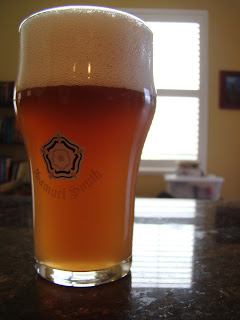 BRING IT ON DIPA
Appearance: (Chill) hazy golden orange color, big off-white head that has a good bit of staying power. In pouring, the beer/bottle yeast can have a strange pinkish hue. Becomes very clear when warm.
Smell: Pine, onion, some alcohol, a little bread as it warms.
Taste: Pine & onion hanging around from the aroma along with some diesel hop character. Some perception of sweetness that may be coming from the hops. Finishes with a balanced bitterness, definitely not overly bitter.
Mouthfeel: On the thin side, though not overly so. Medium carbonation; hits the tongue without filleting it. A little tongue numbing.
Overall: Probably my most successful attempt at a double IPA. This one reached the degree of attenuation I was seeking to get away from cloying malt sweetness; I may even want to bump it back up a couple points next time to retain a bit more malt backbone. Malt definitely didn't get in the way here, and I'm tempted to add in a higher percentage of character grains (Munich, Vienna, aromatic, or even a bit of crystal) in the future. I'm slowly coming to grips with the fact that the Amarillo hops I've had in the last couple years do not have the same citrus characteristics that endeared this varietal to me originally. I'm getting a lot more of the onion/garlic/diesel now. It doesn't always come out--and I sure hope it doesn't on the session IPA I'm brewing today--but I'm missing the mark more often than not with this hop.
=====
 Winter Porter
Appearance: Deep brown/black body with clear red-brown highlights; a little bit of light brown foam hangs out at the rim for a while. While I'd like more head on this beer, otherwise it looks pretty much like spot on for the style.
Smell: I've given this one fifteen to twenty minutes to warm up before sampling, so much of the diacetyl present in this batch--which has been widely variable, bottle to bottle--may have blown off. Some butter popcorn remains, combining with the dark grains and a mineral character to give an impression of sharp mineral roastiness. While not terrible, the diacetyl buttery character has been so strong on other bottles as to make this nigh undrinkable.
Taste: I'm struggling here. Not assertively roasty, though not chocolatey either. Has a certain tang that I associate with the dark malts to a degree, but I can't quite pin with a descriptor. Not the best.
Mouthfeel: Medium-full body from the residual sweetness and slight residual diacetyl. Does retain a certain creaminess, especially when chewed a bit. Not unpleasant.
Overall: Not my favorite porter, to be sure. I've had spectacular results from this yeast (WY1469) in the past, but on this batch it really took a bad turn. This was my first real experience with diacetyl, and it's been strong enough to encourage me to do a diacetyl rest on every beer from here on out. It's been a few years now since I had Flag Porter, but my recollection of that beer was my guide here. My quest for a really badass "English/brown" porter continues.
=====
 BRING IT ON DIPA
Appearance: (Chill) hazy golden orange color, big off-white head that has a good bit of staying power. In pouring, the beer/bottle yeast can have a strange pinkish hue. Becomes very clear when warm.
Smell: Pine, onion, some alcohol, a little bread as it warms.
Taste: Pine & onion hanging around from the aroma along with some diesel hop character. Some perception of sweetness that may be coming from the hops. Finishes with a balanced bitterness, definitely not overly bitter.
Mouthfeel: On the thin side, though not overly so. Medium carbonation; hits the tongue without filleting it. A little tongue numbing.
Overall: Probably my most successful attempt at a double IPA. This one reached the degree of attenuation I was seeking to get away from cloying malt sweetness; I may even want to bump it back up a couple points next time to retain a bit more malt backbone. Malt definitely didn't get in the way here, and I'm tempted to add in a higher percentage of character grains (Munich, Vienna, aromatic, or even a bit of crystal) in the future. I'm slowly coming to grips with the fact that the Amarillo hops I've had in the last couple years do not have the same citrus characteristics that endeared this varietal to me originally. I'm getting a lot more of the onion/garlic/diesel now. It doesn't always come out--and I sure hope it doesn't on the session IPA I'm brewing today--but I'm missing the mark more often than not with this hop.
=====

Appearance: Deep brown/black body with clear red-brown highlights; a little bit of light brown foam hangs out at the rim for a while. While I'd like more head on this beer, otherwise it looks pretty much like spot on for the style.
Smell: I've given this one fifteen to twenty minutes to warm up before sampling, so much of the diacetyl present in this batch--which has been widely variable, bottle to bottle--may have blown off. Some butter popcorn remains, combining with the dark grains and a mineral character to give an impression of sharp mineral roastiness. While not terrible, the diacetyl buttery character has been so strong on other bottles as to make this nigh undrinkable.
Taste: I'm struggling here. Not assertively roasty, though not chocolatey either. Has a certain tang that I associate with the dark malts to a degree, but I can't quite pin with a descriptor. Not the best.
Mouthfeel: Medium-full body from the residual sweetness and slight residual diacetyl. Does retain a certain creaminess, especially when chewed a bit. Not unpleasant.
Overall: Not my favorite porter, to be sure. I've had spectacular results from this yeast (WY1469) in the past, but on this batch it really took a bad turn. This was my first real experience with diacetyl, and it's been strong enough to encourage me to do a diacetyl rest on every beer from here on out. It's been a few years now since I had Flag Porter, but my recollection of that beer was my guide here. My quest for a really badass "English/brown" porter continues.
Friday, February 12, 2016
SMaSH II Tasting

=====
Appearance: Burnished gold, a touch hazy.
Smell: Slight toast, warm malt. Hops come out as herbal and earthy. Maybe just a little citrus hiding in the back.
Taste: Crisp, herbal, slightly orange. It intensifies as it moves to the back half of the tongue, finishing warm and bready. An herbal note lingers.
Mouthfeel: Medium-lean body, mid/low carbonation that gives it just a little bite around the front and sides of the tongue. Not difficult to take the next drink.
Overall: Though it's not terribly complex, it's an easy drinker. The Vienna makes a good impression here. I could use more Sterling character...or maybe I couldn't, as the lingering herbal note isn't necessarily my favorite. I could see this hop working well in a lager.
Monday, February 1, 2016
Double IPA

I blame having a few opportunities over the past couple years to bury my face in a Pliny the Elder at Russian River's brewpub; living on this end of the country definitely has its advantages. For me, this beer still captures the best of hop flavor and drinkability that this style can offer. So, as many before me have done, I loosely modeled this recipe on the one Vinnie Cilurzo has given out freely for many years now.
That being said, I swapped Vinnie's crystal and carapils for dark Munich to add a touch of maltiness and added flaked oats for...well, because I can't help myself. With my excessively low mash temperature, I may yet regret the lack of unfermentables when I check the FG. Hey, I like a well

While I certainly have a lot of trepidation revolving around this batch, fermentation on the Cal ale yeast cake from my recent SMaSH beer took right the hell off, but I easily kept fermentation temps low in a swamp cooler. With the first charge of dry hops in the carboy, it smells amazing; I'm fired up to see how it all turns out in the end.
BRING IT ON
Batch size: 5 gallons
Projected OG: 1.073
Projected SRM: 5.4
Projected IBU: 110.6
Boil time: 70 minutes
Brewhouse efficiency: 60%
Grains/Fermentables
69.8% - 11 lb Rahr 2-row
12.7% - 2 lb Flaked oats
9.5% - 1.5 lb Weyermann Munich II
7.9% - 1.25 lb Table sugar (primary)
Hops
1 oz Columbus (15.2%) (60 min)
1 oz Simcoe (11.6%) (10 min)
.5 oz Centennial (11.2%) (10 min)
1 oz Amarillo (10.7%) (0 min - 60 min whirlpool/hop stand)
1 oz Centennial (8.5%) (0 min - 60 min whirlpool/hop stand)
.5 oz Simcoe (11.1%) (0 min - 60 min whirlpool/hop stand)
2 oz Amarillo (dry hop #1 - 10 days)
2 oz Centennial (dry hop #1 - 10 days)
1.5 oz Simcoe (dry hop #1 - 10 days)
1 oz Amarillo (dry hop #2 - 5 days)
1 oz Centennial (dry hop #2 - 5 days)
1 oz Simcoe (11.6%) (dry hop #2 - 5 days)

Yeast
WLP001 American Ale - cake from SMaSH II
Extras
1 tsp Yeast nutrient (5 min)
Water (mash)
Base Profile: Reno (brewersfriend.com)
114.1 Ca, 18.2 Mg, 10 Na
43.3 Cl, 264.6 SO4
Alkalinity -123.8, RA -215.8
Brewday: 17 January 2016
Mash: 146F for 70 minutes (intended 151F)
Pre-boil volume: 8 gallons
Pre-boil SG: 12.8P (1.050)
Post-boil OG (w/o sugar): 15.6P (1.062)
Salt additions (to mash): 14 g Gypsum, 6 g Epsom salts, 3 g CaCl, 12 (should’ve been 14) ml Lactic acid (88%)
Chilled to 58F.
5.6 gallons to fermenter; 45 seconds of pure O2 at pitching.
Fermented in swamp cooler at 60F ambient.
Sugar addition #1 (.75 lb): 22 January 2016
24 January 2016: moved out of swamp cooler to ambient temp (~66F).
Sugar addition #2 (.5 lb): 25 January 2016
Dry hop #1: 27 January 2016
Dry hop #2: 2 February 2016
Bottled: 6 February 2016
FG: 1.009
ABV: 8.5%
Bottled 5.5 gallons with 4.3 oz table sugar.
Tasting
Monday, January 18, 2016
2015 Barleywine

I shot for an American interpretation, somewhat in the style of Bigfoot. In light of how my Munich II SMaSH turned out, that grain should lend plenty of malty oomph to augment the crystal additions. The hops are geared mostly for bitterness; I don't plan to drink this terribly young, so I'm not worrying too much about the aromatics. The smaller batch size should be enough to taste over the span of 2016 and still leave some for comparison with future iterations. I dig establishing a new tradition.
2015 Barleywine
Batch size: 3.25 gallons
Projected OG: 1.109
Projected SRM: 14.9
Projected IBU: 127.7
Boil time: 120 minutes
Brewhouse efficiency: 59%
Grains/Fermentables
63.2% - 9 lb Rahr 2-row
15.0% - 2 lb Weyermann Munich II
5.3% - 12 oz C40
3.5% - 8 oz C80
14.0% - 2 lb Table sugar (primary)
Hops
1.1 oz Columbus (15.6%) (60 min)
2 oz Centennial (8.5%) (15 min)
Yeast
1 pkg US-05, rehydrated
Extras

1 tsp Yeast nutrient (5 min)
.5 tablet Whirlfloc (5 min)
Water (mash)
Profile: Reno (brewersfriend.com)
10 g Gypsum
6 g Epsom salts
2 g Salt
2 g Chalk
2 ml Lactic acid (88%)
Brewday: 30 December 2015
Mash: 147F for 90 minutes
Pre-boil volume: 6 gallons
Pre-boil SG (w/o sugar): 13.9P (1.055)
Post-boil OG (w/o sugar): 20P (1.081)
Mash water target Mosher’s “Ideal Pale Ale” profile (110 Ca, 18 Mg, 17 Na, 50, Cl, 279 SO4).
3.75 gallons to the fermenter. 1 minute of pure O2 at pitching; reoxygenated 15 hours after pitching with no visible activity.
Fermented in swamp cooler at 60F ambient.
6 January 2015: First sugar addition, 1 lb dissolved in water. Lots of additional fermentation activity. Keeping swamp cooler temps at 60-61F, rousing yeast/off-gassing beer several times a day.
9 January 2015: Second sugar addition, 1 lb dissolved in water. Significant odor I associate with acetobacter, possibly from fermenting with lid only loosely placed on bucket rather than sealed w/ airlock. Might also be from first sugar addition, as odor only appeared after that. We'll see how it turns out.
Secondary: 30 January 2016
FG: 1.008
ABV: 13.5%
3+ gallons to carboy; ~1/2 gallon to growler with .5 oz home-toasted oak (boiled).
Hydrometer sample isn’t thin, but lacks the body and maltiness I’d expect from a barleywine. The bittering hops are very present but not explosive like a young Bigfoot; they lay on the back of the tongue and stay past their welcome.
Bottled: 30 April 2016
Much rounder, more pleasant, and more characteristically barleywine flavor after this time bulk aging. No acetic notes, improved body, and the hop bitterness has recede. Oaked growler didn’t exhibit a lot of oak character, but seemed just fine and went in the bottling bucket with the rest of the batch. Looking forward to tasting this carbonated, and looking forward to it even more next winter when I brew the next batch.
Bottled with 1.7 oz table sugar.
Monday, January 4, 2016
SMaSH II

I've used Vienna quite a bit and really like the bready, grainy warmth it brings to a recipe. Sterling, on the other hand, I've never used in a way that has really accentuated its character. I recall a beer brewed by Ted Danyluk in Chicago in my early days of homebrewing that featured this varietal, but that's about the extent of my experience with it.
Given the lack of hop character in my previous SMaSH, I've bumped up the hops to four ounces this time; hopefully they'll make a more pronounced appearance in this iteration. I suppose I should really aim for a half pound or more to really make them stand out, but we'll see how it goes here. As this beer features a German malt and an American "noble"(ish)-style hop, I went with an American ale yeast fermented a little cooler than normal to get a clean (possibly faux-lager/hybrid?) character.
SMaSH II
Batch size: 5.5 gallons
Projected OG: 1.048
Projected SRM: 5.0
Projected IBU: 37.6
Boil time: 60 minutes
Brewhouse efficiency: 73%

100.0% - 10 lb Weyermann Vienna
Hops
.5 oz Sterling (8.7%) (60 min)
1 oz Sterling (10 min)
1 oz Sterling (0 min - 30 min whirlpool/hop steep)
1.5 oz Sterling (dry hop - 5 days)
1 vial WLP001 California Ale - no starter
Extras
1 tsp Yeast nutrient (5 min)
.5 tablet Whirlfloc (5 min)
Water (mash)
Profile: Reno (brewersfriend.com)
8 g Gypsum
1 g Epsom salts
1 g CaCl
5.5 ml Lactic acid (88%)
Brewday: 27 December 2015
Mash: 152F for 60 minutes
Pre-boil volume: 7.5 gallons
Pre-boil SG: 9.8P (1.038)

Received 45 seconds of pure O2 at pitching. Reoxygentated 12 hours later prior to active fermentation.
Fermented in swamp cooler at 59-61F ambient.
3 January 2016: After 6 days of active fermentation, during which there was active blowoff, upped the swamp cooler temp to 62F.
Despite very cloudy kettle runoff at the end of transfer to primary, there's probably only about 1 qt of trub at the bottom of the fermenter. Will plan to leave less in the kettle in the future!
8 January 2016: Krauesen still present, but very little noticeable activity. Raised swamp cooler temp to 64F & have agitated fermenter daily.
Dry Hop: 9 January 2016
FG: 1.012
ABV: 4.7%
Transferred to new bucket, sealed without an airlock (or hole). Fair bit of splashing during transfer early on, unfortunately, so won’t be surprised it this one turns out oxidized.
Bottled: 15 January 2016
Bottled with 4 oz table sugar.
Tasting: Success! Easy drinking with notes of warm bread and herbal hops.
Wednesday, September 2, 2015
Summer Pale Ale '15 tasting

ALSO: Hey, it's post #100! I've gone through a couple gallons of beer over the last four and a half years since I started whinging about homebrewing. More to come!
=====
Appearance: Amber-gold, a bit hazy. Moderate head laces down the glass.
Smell: Assertive orange juice, hints of dark pine following up. Very nice.
Taste: Orange juice carries through from the aroma, coupled with firm upfront grapefruit/pine bitterness. Finishes somewhat rough, on the onion/pine end of the spectrum. Malt is slightly warm in the finish, but pretty low; it adds a little complexity to the end. Low for a pale ale; the hops are solidly on top.
Mouthfeel: Carbonation is a little prickly; body is low-medium with a nice creaminess. Squarely a pale ale in this area.
Overall: Not a bad pale ale, though not quite to my taste. The assertive onion/pine character was more than I’d prefer. I’d pinned it to the Chinook, though I’ve recently had it suggested to me that this character may come from certain Amarillo crops. In the end, the principal drawback from its sessionability is the hop character; I keep stopping to consider the hop character. Not a bad thing, honestly.
Saturday, August 29, 2015
Competition Pale Ale

I've never really nailed hoppy beers; usually I'm supremely underwhelmed by the aroma and flavor I achieve (the one exception was the session IPA, which is why it went to competition). For this batch, I leaned more toward the currently trendy tropical fruit salad style with Galaxy, blended with the no-longer-new-school big citrus of Amarillo. The malts are overwhelmingly German, with oats for body/mouthfeel (it's getting to be a regular thing) and just a little American crystal. My love affair with Vienna continues, augmented by dark Munich and Caramunich for extra maltiness. Looking for more yeast character than Cal Ale--which also seems to be the current trend for East Coast hoppy beers--I put Denny's Favorite back in the ring.
BeerSmith is back up and running, and the new version has me rethinking my efficiency calculations. I've always had my mash efficiency in mind, but looking through the new version of the program, I'm now trying to think more in terms of overall batch efficiency. Which, of course, means I'm looking at significantly lower numbers. Even factoring in that, my mash efficiency seems to have dropped off a fair bit from even a year ago. Is it my crush (same mill gap), water calculations (need more?), or just Reno? Still working it out.
Brewday went well, though it's a real struggle to get temps in check here in late August; I pitched with the wort only down to 80F. Fortunately, not much seemed to get going before the swamp cooler brought the batch into the mid 60s. The beer is through fermentation now, waiting for an empty carboy so it can receive its dry hops. The yeast will go on to ferment another pale ale, my first straight-up SMaSH.
Galaxarillo Pale Ale

Batch size: 5 gallons
Projected OG: 1.047
Projected SRM: 9.2
Projected IBU: 47.5
Boil time: 60 minutes
Brewhouse efficiency: 64%
Grains
61.5% - 6 lb Best Malz Vienna
20.5% - 2 lb Weyermann Munich II
10. 3% - 1 lb Flaked oats
5.1% - 8 oz Weyermann Caramunich II
2.6% - 4 oz C40
Hops
.2 oz Millennium (15.9%) (60 min)
1 oz Amarillo (10.7%) (10 min)
1 oz Galaxy (14.8%) (10 min)
1 oz Amarillo (dry hop - 5 days)
1 oz Galaxy (dry hop - 5 days)
Yeast
WY1450 Denny’s Favorite 50 - 1.4 l starter with continuous aeration
Extras
1 tsp Irish moss (10 min)
1 tsp Yeast nutrient (10 min)
Water (mash)
Profile: Reno
5 g Gypsum
4 g Epsom salts
3 g CaCl
3 ml Lactic acid (88%)
Brewday: 16 August 2015
Mash: 12.5 qts @ 152F for 60 minutes (+1 qt @ 212F to get to temp)
1st sparge: 10.5 qts @ 190F
2nd sparge: 12 qts @ 180F
Pre-boil volume: 7 gallons
Pre-boil SG: 10.3P (1.040)
Water profile based on the "Light colored & hoppy" profile from brewersfriend.com.
5.5 gallons at 12P (1.047) into the fermenter.
Chilled to 80F (warm ground water), 1 minute pure O2, pitched yeast.
Active fermentation 15 hours later at 65F.
Fermented in swamp cooler at 65F; brought up to 70F at the end of fermentation.
Dry hop: 5 September 2015
FG: 1.015
ABV: 4.2%
Gravity was a few points higher than expected, but the sample didn't taste overly sweet. Nice warm malt character; hops give balanced bitterness with a bit of tropical fruit flavor, but not very pronounced in taste or aroma.
2nd Place, American Ales: NV State Homebrew Championship 2015
Monday, June 15, 2015
Summer Pale Ale '15

So what's first up, coming back after a dry spell and looking to summer quaffing? Yup, American pale ale. This beer should fulfill several of my needs: moderate alcohol, quick turnaround, hoppy, easy drinking in the heat. Somehow, I think I've managed to entirely avoid using Chinook hops--at least in any meaningful, memorable way--in my seven years homebrewing. That ends here: I'm looking forward to tasting this "rough, piney" hop as it plays with Amarillo.
After talking with a new homebrewing friend here in Reno, I'm also messing with a very short dry hop exposure time here. I added the dry hops to the primary last night and the beer will go into bottles after
Summer Pale Ale ’15
Batch size: 5.5 gallons
Projected OG: 1.048
Projected SRM: 8
Projected IBU: 39
Boil time: 60 minutes
Brewhouse efficiency: 75%
Grains
82.1% - 8 lb Vienna
10.3% - 1 lb Flaked oats
5.1% - .5 lb Caravienne
2.5% - .25 lb C60
Hops

.7 oz Chinook (11.4%) (60 min)
1 oz Amarillo (10.7%) (10 min)
2 oz Amarillo (0 min - 150 min steep)
.4 oz Chinook (0 min - 150 min steep)
2 oz Amarillo (Dry hop -
1 oz Chinook (Dry hop -
Yeast
1 pkg US-05 (rehydrated)
Extras
1 tsp Yeast nutrient (0 min)
1 tsp Irish moss (0 min)
Water
Profile: Reno
6 g (7 g) Gypsum
3 g CaCl
3 g (4 g) Epsom Salts
2 mL Lactic Acid (88%)
Brewday: 3 June 2015
Mash: 154F for 60 minutes
Pre-boil volume: 7 gallonsPre-boil SG: 9.2P (1.037)
Water report and chemical calculations from brewersfriend.com, using "light colored & hoppy" setting.
Pure O2 for 60 seconds.
Began fermenting in water bath (68F) by the next morning; cooled bath to 64F. Let water bath free rise to 70F on 6th day after active fermentation began. Removed from water bath—free rise to ~75F—on 9th day after active fermentation began.
Dry hop: 14 June 2015
Bottled: 19 June 2015
FG: 1.012
ABV: 4.7%
Bottled with 4.2 oz table sugar.
Early tasting: 3 July 2015
Still young in the bottle, but so far this beer seems solidly made, with no standout off-flavors. Great Amarillo aroma; however, I don't think I'm really into Chinook. In its best moments, it adds an assertive piney note to the flavor, which can be very interesting; at its worst it gives the beer a rough, muddled, and (dare I say it) somewhat "catty" character. Hoping further age will better meld the hops.
Monday, March 9, 2015
Session IPA II

While I'm still fond of beers with significant percentages of rye in the grist, it's high time I reached the end of the sack of Weyermann rye malt I've been working through. So on this batch, Vienna was out and rye was in. All other variables remained the same: the grist (including the base malt percentage), the hopping, the yeast (though it was a repitch of the washed cake from the first batch), and the fermentation conditions.
My past with rye has been sortid, and the runnings were predictably slow to emerge from the mash. I ended up heating the first runnings and adding it back as well as adding wetted rice hulls and giving it several hours to run off. I added a small amount of sparge water when the kettle volume came in low...which ended up pulling out the missing wort and giving me a higher than intended boil volume. The OG came in a bit higher than the first batch because of it.

While this batch wasn't sweet, the rye is overwhelming; despite the low ABV, it's difficult to consume more than a glass at a time. I find the session IPA concept as a whole to be very sound, though: keep it malty by using characterful grains, mashing high, and not sparging; go with big late hopping; and use a yeast with a lot of its own character. This definitely fulfills a hop jones without nailing the drinker with an overabundance of alcohol. I suspect there will be more of this around as the weather continues to warm.
Session IPA II - The Rye (also posted at Brewtoad)
Batch size: 5 gallons
Projected OG: 1.043
Projected SRM: 8
Projected IBU: 43
Boil time: 60 minutes
Brewhouse efficiency: 71%
Grains
83.3% - 7.5 lb Weyermann Rye malt
11.1% - 1 lb Flaked oats
5.6% - .5 lb Belgian Caramunich 80L
Hops
2.0 oz Amarillo (10.7%) (10 min)
.5 oz Columbus (15.6%) (10 min)
.5 oz Centennial (11.3%) (10 min)
1.0 oz Amarillo (0 min) 30-min steep
.5 oz Columbus (0 min) 30-min steep
.5 oz Centennial (0 min) 30-min steep
.5 oz Centennial (Dry hop - 5 days) - Cask #2
.5 oz Amarillo (Dry hop - 5 days) - Cask #3
 Yeast
Yeast
Wyeast WY1469 West Yorkshire Ale - no starter
Water
Profile: Reno
9 g Gypsum
3 g CaCl
2 ml Lactic acid (88%)
Brewday: 15 February 2015
Mash: 154F for 60 minutes
No sparge (mostly) - added 5 qts @ 212F to get out
Pre-boil volume: 7.8 gallons
Pre-boil SG: 9.7P (1.039)
Runoff was sticky; lautered about 2/3 before it stuck hard. Heated runnings to 185F & added back to mash tun. Also tried blowing out hose & adding two wetted handfuls of rice hulls.
Fermenter volume: 5.4 gallons
Fermented at 64-66F, raised to 70F near the end of fermentation.
.5 oz Columbus (15.6%) (10 min)
.5 oz Centennial (11.3%) (10 min)
1.0 oz Amarillo (0 min) 30-min steep
.5 oz Columbus (0 min) 30-min steep
.5 oz Centennial (0 min) 30-min steep
.5 oz Centennial (Dry hop - 5 days) - Cask #2
.5 oz Amarillo (Dry hop - 5 days) - Cask #3
Wyeast WY1469 West Yorkshire Ale - no starter
Water
Profile: Reno
9 g Gypsum
3 g CaCl
2 ml Lactic acid (88%)
Brewday: 15 February 2015
Mash: 154F for 60 minutes
No sparge (mostly) - added 5 qts @ 212F to get out
Pre-boil volume: 7.8 gallons
Pre-boil SG: 9.7P (1.039)
Runoff was sticky; lautered about 2/3 before it stuck hard. Heated runnings to 185F & added back to mash tun. Also tried blowing out hose & adding two wetted handfuls of rice hulls.
Fermenter volume: 5.4 gallons
Fermented at 64-66F, raised to 70F near the end of fermentation.
Bottled: 28 February 2015
FG: 1.020!
ABV: 3.0%
Bottled with 2.1 oz table sugar. 3 gallons went into cubitainers: one plain, one with .5 oz Amarillo, one with .5 oz Centennial.
Subscribe to:
Posts (Atom)