I dig a good English bitter, particular a nice low-ABV ordinary bitter when I can find it. Brewed on the fifth of November, it only seemed appropriate to name this session beer after Guy Fawkes.
The recipe for this beer was very simple, though I had to sub in WLP002--the über flocculator--for my preferred WY1469. Mash temp turned out to be extra low, leading to a thin, overly attenuated beer. Things also got tough with dry hopping; I'd planned to go just a few days before bottling, but a cold postponed bottling day until after a trip, leading to sixteen days of contact time. The aromatics were lost and the extra hops may have contributed a harsher vegetal character to the bittering. Add to that the fact that this beer hasn't properly carbonated and we have a fairly unappetizing tipple. Hoping a bit more time in the bottle will add carbonation that will lift it just a bit.
Check out my Nov 5, 2019 instagram post to see a few brewday pics.
//
#177 Fawkes Bitter
Batch size: 4 gallons
Projected OG: 1.039
Projected SRM: 6.8
Projected IBU: 28.3
Boil time: 60 minutes
Brewhouse efficiency: 87%
Grains/Fermentables
83.3% - 5 lb Golden Promise
16.7% - 1 lb Carastan
Hops
.5 oz Mandarina Bavaria (10.7%) (30 min)
1 oz Styrian Celeja (3.0%) (5 min)
.5 oz Cryo Loral (22.7%) (5 min)
1 oz Styrian Celeja (dry hop - 3 days)
.5 oz Cryo Loral (dry hop - 3 days)
Yeast
WLP002 - no starter
Extras
1 tsp Yeast nutrient (5 min)
1/2 tab Whirlfloc
Water (mash)
Profile: Denver (brewersfriend ID: 2CZ8J00)
5 g Gypsum
2 g Epsom salts
Brewday: 5 November 2019
Mash: 11 qts @ 149F for 60 minutes
Sparge: 8 qts @ 212F
Sparge: 8 qts @ 212F
Pre-boil volume: 6 gallons
Transferred 4.75 gallons to fermenter.
Fermented in swamp cooler. Day 1 - 65F; 2 - 66F; 3 - 68F; 4 - 70F; 5 - 72F; 6 - 73F
Dry hop: 7 November 2019
Agitated fermenter several times/day to get yeast back in suspension.
Bottled: 23 November 2019
FG: 1.010
ABV: 3.8%
Bottled with 2.3 oz table sugar.
Sample tasted neutral with a firm bitterness. Not getting a lot of standout malt/yeast/hop characters.

Showing posts with label British. Show all posts
Showing posts with label British. Show all posts
Friday, December 6, 2019

#176 Hoppy Brown Ale
This was the "small beer" from my RIS IV mash. Since the RIS mash was done in two parts, I followed the same reiterated mashing technique for the brown: I resparged the "spent" first RIS mash for my initial brewing liquor for the brown, then used this liquor to resparge the spent second RIS mash portion. Confusing and overly complicated to execute, but it yielded a decent small beer.
The hops ended up relatively muddled; the final beer was firmly bitter with just a general "hoppy" aroma. This read more like a black IPA than a real brown ale, but was still overall enjoyable.
Sorry, no extant pictures of this one!
//
#176 Hoppy Brown (RIS IV final runnings small beer - American Brown)
Batch size: 3 gallons
Projected OG: 1.041
Projected SRM: 43.6
Projected IBU: 40.6
Boil time: 60 minutes
Brewhouse efficiency: 17.5%
Grains/Fermentables
59.6% - 17 lb 2-row
17.5% - 5 lb Munich I
14.0% - 4 lb Flaked oats
3.5% - 1 lb Roasted barley
3.5% - 1 lb Special B
1.8% - 8 oz Chocolate
Hops
.2 oz El Dorado (13.4%) (60 min)
.2 oz Centennial (9.1%) (10 min)
.2 oz Hallertau Blanc (9.7%) (10 min)
.8 oz El Dorado (hop steep - 30 min)
.3 oz Centennial (hop steep - 30 min)
1.5 oz Centennial (dry hop - 4 days)
1.3 oz Hallertau Blanc (dry hop - 4 days)
Yeast
1 pkg WLP066 London Fog - .5 l starter
Extras
1 tsp Yeast nutrient (5 min)
1/2 tab Whirlfloc
Water (mash)
Profile: Denver (brewersfriend ID: 2CZ8J00)
Brewday: 22 July 2019
Mash #1 (15 lb 2-row): 20 qts @ 170F
Short rest & runoff following RIS mash #1 lauter
Mash #2 (remainder of grain bill): Mash #1 liquor @ 170F
Short rest & runoff following RIS mash #2 lauter
Pre-boil volume: 5.5 gallons
Pre-boil SG: 9.2P (1.036)
Transferred 3.9 gallons to fermenter.
Fermented in swamp cooler at 67F ambient.
29 July 2019: It seems like active fermentation has probably ceased, but the krauesen is still sitting on top of the beer (much like with WY1469). Removed from swamp cooler to rest at 70F ambient.
Dry hop: 1 August 2019
Krauesen layer still present; breaks up momentarily but doesn’t sink with agitation.
Bottled: 5 August 2019
FG: 1.010
ABV: 4.1%
Bottled with 3.4 oz table sugar.
The hops ended up relatively muddled; the final beer was firmly bitter with just a general "hoppy" aroma. This read more like a black IPA than a real brown ale, but was still overall enjoyable.
Sorry, no extant pictures of this one!
//
#176 Hoppy Brown (RIS IV final runnings small beer - American Brown)
Batch size: 3 gallons
Projected OG: 1.041
Projected SRM: 43.6
Projected IBU: 40.6
Boil time: 60 minutes
Brewhouse efficiency: 17.5%
Grains/Fermentables
59.6% - 17 lb 2-row
17.5% - 5 lb Munich I
14.0% - 4 lb Flaked oats
3.5% - 1 lb Roasted barley
3.5% - 1 lb Special B
1.8% - 8 oz Chocolate
Hops
.2 oz El Dorado (13.4%) (60 min)
.2 oz Centennial (9.1%) (10 min)
.2 oz Hallertau Blanc (9.7%) (10 min)
.8 oz El Dorado (hop steep - 30 min)
.3 oz Centennial (hop steep - 30 min)
1.5 oz Centennial (dry hop - 4 days)
1.3 oz Hallertau Blanc (dry hop - 4 days)
Yeast
1 pkg WLP066 London Fog - .5 l starter
Extras
1 tsp Yeast nutrient (5 min)
1/2 tab Whirlfloc
Water (mash)
Profile: Denver (brewersfriend ID: 2CZ8J00)
Brewday: 22 July 2019
Mash #1 (15 lb 2-row): 20 qts @ 170F
Short rest & runoff following RIS mash #1 lauter
Mash #2 (remainder of grain bill): Mash #1 liquor @ 170F
Short rest & runoff following RIS mash #2 lauter
Pre-boil volume: 5.5 gallons
Pre-boil SG: 9.2P (1.036)
Transferred 3.9 gallons to fermenter.
Fermented in swamp cooler at 67F ambient.
29 July 2019: It seems like active fermentation has probably ceased, but the krauesen is still sitting on top of the beer (much like with WY1469). Removed from swamp cooler to rest at 70F ambient.
Dry hop: 1 August 2019
Krauesen layer still present; breaks up momentarily but doesn’t sink with agitation.
Bottled: 5 August 2019
FG: 1.010
ABV: 4.1%
Bottled with 3.4 oz table sugar.
#175 RIS IV
...and we're back! Fell out of the blogging habit for quite a while there. As this blog was meant mostly to document my brewing and record my thoughts on the results, these posts will probably slim down (unless there's a good reason to really get into the weeds on ingredients, process, etc.). Onward!
My latest quarter-century batch came up in July; time for my fourth Russian imperial stout! Double reiterated mash, per usual. Grain bill accentuating rich maltiness and a blend of dark/roasty characters. I didn't notice a lot of impact from the four months it spent on oak cubes, but it went to bottle tasting very nice: lots of dark chocolate, roasty/almost smoky aroma, formidable body. One gallon will sit on Seville orange peel and cassia cinnamon bark for a while to see what they might add.
//
 #175 RIS IV
Batch size: 5 gallons
Projected OG: 1.106
Projected SRM: 36.5
Projected IBU: 61.8
Boil time: 90 minutes
Brewhouse efficiency: 56%
Grains/Fermentables
59.6% - 17 lb 2-row
17.5% - 5 lb Munich I
14.0% - 4 lb Flaked oats
3.5% - 1 lb Roast barley
3.5% - 1 lb Special B
1.8% - 8 oz Chocolate
Hops
2 oz El Dorado (13.4%) (90 min)
Yeast
2 pkg US-05
Extras
1 tsp Yeast nutrient (5 min)
1/2 tab Whirlfloc
5 g Seville orange peel (tertiary)
2 g Saigon cassia cinnamon (tertiary)
 Water (mash)
Profile: Denver (brewersfriend ID: 2CZ8J00)
Mash #1:
2 g Gypsum
5 g CaCl
3 g Citric acid
Mash #2 (ended up in sparge water - d’oh!):
2 g Epsom salts
5 g CaCl
2 g Chalk (dissolved in carbonated water)
Brewday: 22 July 2019
Mash #1 (15lb 2-row): 19 qts @ 150F for 20 minutes
Sparge: 18.5 qts @ 150F
SG: 13.8P (1.055)
Volume: 7.5 gallons - hold at 150F
Mash #2 (remainder of grain bill): Mash #1 liquor @ 140F for 90 minutes
Sparge: 10 qts @ 175F
Draw off & boil 1 gallon, add back to raise temp to 148F
Draw off & boil 1.25 gallons, add back to raise temp to 161F
Pre-boil volume: 7.5 gallons
Pre-boil SG: 21.3P (1.087)
Transferred 5.5 gallons to fermenter.
Fermented in swamp cooler at 67F ambient.
 29 July 2019: Active fermentation has ceased; krauesen has fallen. Taken out of swamp cooler to rest at 70F ambient.
Secondary: 5 August 2019
SG: 1.024
Added 1.1 oz home toasted American oak
Bottled: 5 December 2019
FG: 1.025
ABV: 9.9%
Bottled 3.9 gallons with 2.9 oz table sugar and rehydrated US-05.
Transferred 1 gallon to tertiary with rye-soaked Seville orange peel and Saigon cassia cinnamon.
My latest quarter-century batch came up in July; time for my fourth Russian imperial stout! Double reiterated mash, per usual. Grain bill accentuating rich maltiness and a blend of dark/roasty characters. I didn't notice a lot of impact from the four months it spent on oak cubes, but it went to bottle tasting very nice: lots of dark chocolate, roasty/almost smoky aroma, formidable body. One gallon will sit on Seville orange peel and cassia cinnamon bark for a while to see what they might add.
//

Batch size: 5 gallons
Projected OG: 1.106
Projected SRM: 36.5
Projected IBU: 61.8
Boil time: 90 minutes
Brewhouse efficiency: 56%
Grains/Fermentables
59.6% - 17 lb 2-row
17.5% - 5 lb Munich I
14.0% - 4 lb Flaked oats
3.5% - 1 lb Roast barley
3.5% - 1 lb Special B
1.8% - 8 oz Chocolate
Hops
2 oz El Dorado (13.4%) (90 min)
Yeast
2 pkg US-05
Extras
1 tsp Yeast nutrient (5 min)
1/2 tab Whirlfloc
5 g Seville orange peel (tertiary)
2 g Saigon cassia cinnamon (tertiary)

Profile: Denver (brewersfriend ID: 2CZ8J00)
Mash #1:
2 g Gypsum
5 g CaCl
3 g Citric acid
Mash #2 (ended up in sparge water - d’oh!):
2 g Epsom salts
5 g CaCl
2 g Chalk (dissolved in carbonated water)
Brewday: 22 July 2019
Mash #1 (15lb 2-row): 19 qts @ 150F for 20 minutes
Sparge: 18.5 qts @ 150F
SG: 13.8P (1.055)
Volume: 7.5 gallons - hold at 150F
Mash #2 (remainder of grain bill): Mash #1 liquor @ 140F for 90 minutes
Sparge: 10 qts @ 175F
Draw off & boil 1 gallon, add back to raise temp to 148F
Draw off & boil 1.25 gallons, add back to raise temp to 161F
Pre-boil volume: 7.5 gallons
Pre-boil SG: 21.3P (1.087)
Transferred 5.5 gallons to fermenter.
Fermented in swamp cooler at 67F ambient.

Secondary: 5 August 2019
SG: 1.024
Added 1.1 oz home toasted American oak
Bottled: 5 December 2019
FG: 1.025
ABV: 9.9%
Bottled 3.9 gallons with 2.9 oz table sugar and rehydrated US-05.
Transferred 1 gallon to tertiary with rye-soaked Seville orange peel and Saigon cassia cinnamon.
Friday, July 22, 2016
Dark Mild Tasting
Happy to get to tasting notes on this beer, which I've been enjoying all summer. I still haven't really connected with this style; it strikes me as somewhere between a blonde ale (light, not overtly hoppy, easy drinking) and an English brown (rich "fruity" English yeast character, chocolate & toffee from roasted & caramel malts). This batch has been much more drinkable than past attempts. My most recent session IPA has been more of a go-to of late, but it's been nice to switch it up regularly by going to the "dark side."

Appearance: Deep brown, ruby highlights when held to the light. The latte-like head lingers for most of the session.
Smell: Toffee dominates, followed by a little burnt caramel.
Taste: Toffee, milk chocolate, hint of coffee, a little peach, a whiff of alcohol on the end. No hops of which to speak.
Mouthfeel: Round, surprisingly full for such a low-gravity beer. A little tickle of carbonation keeps it from overstaying its welcome.
Overall: Though it still strikes me as an odd duck--I haven't tried too many examples to "normalize" my palate to it--it's a solid little fighter. I'm encouraged to keep exploring this style in the future.

Appearance: Deep brown, ruby highlights when held to the light. The latte-like head lingers for most of the session.
Smell: Toffee dominates, followed by a little burnt caramel.
Taste: Toffee, milk chocolate, hint of coffee, a little peach, a whiff of alcohol on the end. No hops of which to speak.
Mouthfeel: Round, surprisingly full for such a low-gravity beer. A little tickle of carbonation keeps it from overstaying its welcome.
Overall: Though it still strikes me as an odd duck--I haven't tried too many examples to "normalize" my palate to it--it's a solid little fighter. I'm encouraged to keep exploring this style in the future.
Wednesday, June 1, 2016
Dark Mild

I grew up the West Yorkshire Ale yeast from my sadly diacetyl-laden porter, hoping that getting past that first generation might yield better results. Thankfully it did: I've noticed no diacetyl so far. I also skipped water treatment (except carbon filtering) this time. As I continue to refine my brewing practices, it seemed a good idea to see what kind of beer my source water produces on its own before monkeying with the chemistry, which I still don't fully grasp (it's been slow going through Water for some time now). I'll pick on this aspect if/when I rebrew this recipe.
As this style traditionally gets the cask treatment, my three one-gallon cubitainers came back out on bottling day. Not having any interesting aroma hops around at the time--and this being a more malt-focused style anyway--experimentation between vessels took a different turn. One cubitainer remained plain, one got home-toasted oak cubes, and the last got a small dose of whole Stumptown coffee beans from our recent trip to Portland. I sampled liberally from all three in celebration of Memorial Day; while all were quite good, the oaked version really stood out for me. Full tasting notes coming soon!
Dark Mild

Batch size: 5.5 gallons
Projected OG: 1.040
Projected SRM: 19.1
Projected IBU: 22.3
Boil time: 60 minutes
Brewhouse efficiency: 64%
Grains/Fermentables
60.6% - 5 lb Rahr 2-row
12.1% - 1 lb Bairds Crystal 75L
3.0% - 4 oz Bairds RB
12.1% - 1 lb Flaked oats
12.1% - 1 lb Turbinado
Hops
1 oz EKG (5.7%) (60 min)
Yeast
WY1469 West Yorkshire Ale - 1L starter from Winter Porter yeast cake
Extras
1 tsp Yeast nutrient (5 min)
.5 tablet Whirlfloc (5 min)
Water (mash)
Profile: Reno (brewersfriend.com)
Brewday: 7 May 2016
Mash: 153F for 60 minutes
Pre-boil volume: 7.5 gallons
Pre-boil SG (w/o sugar): 6.9P (1.027)
 Fermented in bucket with lid loose in swamp cooler at 65F ambient; locked down lid, affixed airlock, and ramped up to 68F after 3 days active fermentation.
Bottled: 23 May 2016
FG: 1.010
ABV: 3.9%
3 gallons into cubitainers, each with .2 oz table sugar: 1 plain, 1 with g oak cubes (boiled), 1 with 3 g Stumptown El Nevado Colombian coffee beans (whole, loose, unsanitized).
Remainder bottled with 1.66 oz table sugar.
Tuesday, May 24, 2016
Double IPA & Winter Porter Tasting
While brewing a session IPA today to have on hand for summer festivities, I finally decided to knock out a couple sets of tasting notes. Neither of these beers turned out exactly as I'd like. The double IPA seems like it might've found the mark if I wouldn't cling so closely to my memory of what Amarillo hops used to be; the porter suffered from my own misuse or mistreatment of the West Yorkshire Ale yeast. For all the smack I talk below, I'm still drinking both these beers without having to work too hard to choke them down.
=====
 BRING IT ON DIPA
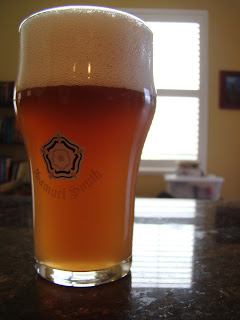
Appearance: (Chill) hazy golden orange color, big off-white head that has a good bit of staying power. In pouring, the beer/bottle yeast can have a strange pinkish hue. Becomes very clear when warm.
Smell: Pine, onion, some alcohol, a little bread as it warms.
Taste: Pine & onion hanging around from the aroma along with some diesel hop character. Some perception of sweetness that may be coming from the hops. Finishes with a balanced bitterness, definitely not overly bitter.
Mouthfeel: On the thin side, though not overly so. Medium carbonation; hits the tongue without filleting it. A little tongue numbing.
Overall: Probably my most successful attempt at a double IPA. This one reached the degree of attenuation I was seeking to get away from cloying malt sweetness; I may even want to bump it back up a couple points next time to retain a bit more malt backbone. Malt definitely didn't get in the way here, and I'm tempted to add in a higher percentage of character grains (Munich, Vienna, aromatic, or even a bit of crystal) in the future. I'm slowly coming to grips with the fact that the Amarillo hops I've had in the last couple years do not have the same citrus characteristics that endeared this varietal to me originally. I'm getting a lot more of the onion/garlic/diesel now. It doesn't always come out--and I sure hope it doesn't on the session IPA I'm brewing today--but I'm missing the mark more often than not with this hop.
=====
 Winter Porter
Appearance: Deep brown/black body with clear red-brown highlights; a little bit of light brown foam hangs out at the rim for a while. While I'd like more head on this beer, otherwise it looks pretty much like spot on for the style.
Smell: I've given this one fifteen to twenty minutes to warm up before sampling, so much of the diacetyl present in this batch--which has been widely variable, bottle to bottle--may have blown off. Some butter popcorn remains, combining with the dark grains and a mineral character to give an impression of sharp mineral roastiness. While not terrible, the diacetyl buttery character has been so strong on other bottles as to make this nigh undrinkable.
Taste: I'm struggling here. Not assertively roasty, though not chocolatey either. Has a certain tang that I associate with the dark malts to a degree, but I can't quite pin with a descriptor. Not the best.
Mouthfeel: Medium-full body from the residual sweetness and slight residual diacetyl. Does retain a certain creaminess, especially when chewed a bit. Not unpleasant.
Overall: Not my favorite porter, to be sure. I've had spectacular results from this yeast (WY1469) in the past, but on this batch it really took a bad turn. This was my first real experience with diacetyl, and it's been strong enough to encourage me to do a diacetyl rest on every beer from here on out. It's been a few years now since I had Flag Porter, but my recollection of that beer was my guide here. My quest for a really badass "English/brown" porter continues.
=====
 BRING IT ON DIPA
Appearance: (Chill) hazy golden orange color, big off-white head that has a good bit of staying power. In pouring, the beer/bottle yeast can have a strange pinkish hue. Becomes very clear when warm.
Smell: Pine, onion, some alcohol, a little bread as it warms.
Taste: Pine & onion hanging around from the aroma along with some diesel hop character. Some perception of sweetness that may be coming from the hops. Finishes with a balanced bitterness, definitely not overly bitter.
Mouthfeel: On the thin side, though not overly so. Medium carbonation; hits the tongue without filleting it. A little tongue numbing.
Overall: Probably my most successful attempt at a double IPA. This one reached the degree of attenuation I was seeking to get away from cloying malt sweetness; I may even want to bump it back up a couple points next time to retain a bit more malt backbone. Malt definitely didn't get in the way here, and I'm tempted to add in a higher percentage of character grains (Munich, Vienna, aromatic, or even a bit of crystal) in the future. I'm slowly coming to grips with the fact that the Amarillo hops I've had in the last couple years do not have the same citrus characteristics that endeared this varietal to me originally. I'm getting a lot more of the onion/garlic/diesel now. It doesn't always come out--and I sure hope it doesn't on the session IPA I'm brewing today--but I'm missing the mark more often than not with this hop.
=====

Appearance: Deep brown/black body with clear red-brown highlights; a little bit of light brown foam hangs out at the rim for a while. While I'd like more head on this beer, otherwise it looks pretty much like spot on for the style.
Smell: I've given this one fifteen to twenty minutes to warm up before sampling, so much of the diacetyl present in this batch--which has been widely variable, bottle to bottle--may have blown off. Some butter popcorn remains, combining with the dark grains and a mineral character to give an impression of sharp mineral roastiness. While not terrible, the diacetyl buttery character has been so strong on other bottles as to make this nigh undrinkable.
Taste: I'm struggling here. Not assertively roasty, though not chocolatey either. Has a certain tang that I associate with the dark malts to a degree, but I can't quite pin with a descriptor. Not the best.
Mouthfeel: Medium-full body from the residual sweetness and slight residual diacetyl. Does retain a certain creaminess, especially when chewed a bit. Not unpleasant.
Overall: Not my favorite porter, to be sure. I've had spectacular results from this yeast (WY1469) in the past, but on this batch it really took a bad turn. This was my first real experience with diacetyl, and it's been strong enough to encourage me to do a diacetyl rest on every beer from here on out. It's been a few years now since I had Flag Porter, but my recollection of that beer was my guide here. My quest for a really badass "English/brown" porter continues.
Saturday, May 7, 2016
Winter Porter

The beer came together without incident, but the yeast behaved differently than I expected. My experience with West Yorkshire Ale is that the kraeusen hangs around long after active fermentation ceases. This time around, I saw almost no visible activity other than a bit of trub ring. Though this batch had plenty of time to sit at room temp at the end of fermentation, this batch showed lots of diacetyl shortly after bottling. Fortunately, a lot of that has seemed to dissipate over time. The resulting beer is pleasant, though it has an edge that I attribute to too much roast malt. I kept pushing up the roasted grains in BeerSmith to get it dark enough; the end result is plenty brown-black, but could probably do with a reduction in these malts to keep it from getting to acrid. The remaining diacetyl works with the acrid roast character in a not unpleasant way, resulting in a bit of dark fruit character rounding out the flavor. Not bad; would rebrew with tweaks.
Winter Porter
Batch size: 5.5 gallons
Projected OG: 1.045
Projected SRM: 29.1
Projected IBU: 27.9
Boil time: 70 minutes
Brewhouse efficiency: 66%
Grains/Fermentables
67.5% - 7 lb Rahr 2-row
14.5% - 1.5 lb Brown malt
9.6% - 1 lb UK dark crystal (75-80L)
4.8% - 8 oz UK Pale Chocolate
3.6% - 6 oz UK Chocolate
Hops

1.3 oz EKG (5.7%) (10 min)
.3 oz Styrian Goldings (3.8%) (10 min)
Yeast
WY1469 West Yorkshire Ale - no starter
Extras
1 tsp Yeast nutrient (5 min)
Water (mash)
Base Profile: Reno (brewersfriend.com)
107 Ca, 11.2 Mg, 44.1 Na, 63.7 SO4
Alkalinity 171.6, RA 88.7
Brewday: 10 February 2016
Mash: 13 qts @ 154F for 60 minutes + 2 qts @ 212F to get to temp
1st sparge: 12 qts @ 190F
2nd sparge: 13 qts @ 180F
Pre-boil volume: gallons
Pre-boil SG: 10P (1.0)
Salt additions (to mash): 1 g Gypsum, 3 g Epsom salt, 4 g CaCl, 11 g Chalk, 5 g Baking Soda, 8 ml Lactic Acid (88%)
5.8 gallons at 64F to the fermenter; no aeration past transfer splashing.
Fermented in swamp cooler at 65F ambient.
13 February 2016: Visible activity stopped without any sign of the never-ending krauesen characteristic of this yeast. Removed from swamp cooler & agitated; sat at ambient (68F). Moderate surface bubbling—not a real krauesen yet—appeared over the course of the day.
Bottled: 2 March 2016
FG: 1.018
ABV: 3.5%
Bottled with 3.4 oz table sugar.
Moved final gallon onto Sour Culture No. 2.
Sour Bottled: 30 April 2016
FG: 1.013
ABV: 4.2%
Good lactic sourness.
Bottled with .3 oz table sugar.
Tasting
Thursday, October 22, 2015
Timothy Taylor Landlord Clone

I've had Graham Wheeler's Brew Your Own British Real Ale for a while, but don't think I've ever brewed any recipes straight out of it. Having heard/read rave reviews of Timothy Taylor Landlord, a best bitter, and having had some very good experiences with Wyeast's West Yorkshire Ale strain, which some associate with this beer, it seemed high time to finally dig into the Wheeler and see how I did with his recipe.
Other than slight adjustments to reach round numbers, the recipe was straight from the book. Michael Tonsmiere's take on Tim Taylor provided the water chemistry. The wort's color in the fermenter struck me as a little sickly, but it looks great in the glass. Having been out of town, I haven't sampled the final product in a week or two, but my initial impressions were that I may have caused some oxidation at bottling. Will post full tasting notes in the near future (below).
Timothy Taylor Landlord (Wheeler)
Batch size: 5.5 gallons
Projected OG: 1.046
Projected SRM: 28.7
Projected IBU: 7.0
Boil time: 60 minutes
Brewhouse efficiency: 70%
Grains
99.3% - 9 lb Fawcett Floor Malted Maris Otter
0.7% - 1 oz Black Patent

Hops
.7 oz East Kent Goldings (5.7%) (60 min)
.7 oz Styrian Goldings (3.8%) (60 min)
1 oz Styrian Goldings (10 min)
Yeast
WY1469 West Yorkshire Ale - no starter
Extras
1 tsp Yeast nutrient (5 min)
.5 tab Whirlfloc (5 min)
Water (mash)
Profile: Reno
Target water profile from the Mad Fermentationist (link above)
9 g Gypsum
1 g Epsom salts
3 ml Lactic acid (88%)
Brewday: 7 September 2015
Mash: 151F for 60 minutes
Pre-boil volume: 7.6 gallons
Pre-boil SG: 9.9P (1.039)
5.5 gallons to fermenter at 11.6P.
Fermented in swamp cooler at 65F.
Moved out of swamp cooler to ambient temps (60-68F) after 6 days of active primary, near end of activity.
Bottled: 19 September 2015
FG: 1.010
ABV: 4.7%
Bottled with 3.2 oz table sugar.
Tasting: 4 January 2016
Super clear with a gorgeous tawny color, but overcarbonated, overly thin, and just a bit unpleasantly funky. I've been thinking it's oxidized, though the opinion of my LHBS is that it has a touch of lacto character. One way or another, it's a dumper.
Monday, March 9, 2015
Session IPA II

While I'm still fond of beers with significant percentages of rye in the grist, it's high time I reached the end of the sack of Weyermann rye malt I've been working through. So on this batch, Vienna was out and rye was in. All other variables remained the same: the grist (including the base malt percentage), the hopping, the yeast (though it was a repitch of the washed cake from the first batch), and the fermentation conditions.
My past with rye has been sortid, and the runnings were predictably slow to emerge from the mash. I ended up heating the first runnings and adding it back as well as adding wetted rice hulls and giving it several hours to run off. I added a small amount of sparge water when the kettle volume came in low...which ended up pulling out the missing wort and giving me a higher than intended boil volume. The OG came in a bit higher than the first batch because of it.

While this batch wasn't sweet, the rye is overwhelming; despite the low ABV, it's difficult to consume more than a glass at a time. I find the session IPA concept as a whole to be very sound, though: keep it malty by using characterful grains, mashing high, and not sparging; go with big late hopping; and use a yeast with a lot of its own character. This definitely fulfills a hop jones without nailing the drinker with an overabundance of alcohol. I suspect there will be more of this around as the weather continues to warm.
Session IPA II - The Rye (also posted at Brewtoad)
Batch size: 5 gallons
Projected OG: 1.043
Projected SRM: 8
Projected IBU: 43
Boil time: 60 minutes
Brewhouse efficiency: 71%
Grains
83.3% - 7.5 lb Weyermann Rye malt
11.1% - 1 lb Flaked oats
5.6% - .5 lb Belgian Caramunich 80L
Hops
2.0 oz Amarillo (10.7%) (10 min)
.5 oz Columbus (15.6%) (10 min)
.5 oz Centennial (11.3%) (10 min)
1.0 oz Amarillo (0 min) 30-min steep
.5 oz Columbus (0 min) 30-min steep
.5 oz Centennial (0 min) 30-min steep
.5 oz Centennial (Dry hop - 5 days) - Cask #2
.5 oz Amarillo (Dry hop - 5 days) - Cask #3
 Yeast
Yeast
Wyeast WY1469 West Yorkshire Ale - no starter
Water
Profile: Reno
9 g Gypsum
3 g CaCl
2 ml Lactic acid (88%)
Brewday: 15 February 2015
Mash: 154F for 60 minutes
No sparge (mostly) - added 5 qts @ 212F to get out
Pre-boil volume: 7.8 gallons
Pre-boil SG: 9.7P (1.039)
Runoff was sticky; lautered about 2/3 before it stuck hard. Heated runnings to 185F & added back to mash tun. Also tried blowing out hose & adding two wetted handfuls of rice hulls.
Fermenter volume: 5.4 gallons
Fermented at 64-66F, raised to 70F near the end of fermentation.
.5 oz Columbus (15.6%) (10 min)
.5 oz Centennial (11.3%) (10 min)
1.0 oz Amarillo (0 min) 30-min steep
.5 oz Columbus (0 min) 30-min steep
.5 oz Centennial (0 min) 30-min steep
.5 oz Centennial (Dry hop - 5 days) - Cask #2
.5 oz Amarillo (Dry hop - 5 days) - Cask #3
Wyeast WY1469 West Yorkshire Ale - no starter
Water
Profile: Reno
9 g Gypsum
3 g CaCl
2 ml Lactic acid (88%)
Brewday: 15 February 2015
Mash: 154F for 60 minutes
No sparge (mostly) - added 5 qts @ 212F to get out
Pre-boil volume: 7.8 gallons
Pre-boil SG: 9.7P (1.039)
Runoff was sticky; lautered about 2/3 before it stuck hard. Heated runnings to 185F & added back to mash tun. Also tried blowing out hose & adding two wetted handfuls of rice hulls.
Fermenter volume: 5.4 gallons
Fermented at 64-66F, raised to 70F near the end of fermentation.
Bottled: 28 February 2015
FG: 1.020!
ABV: 3.0%
Bottled with 2.1 oz table sugar. 3 gallons went into cubitainers: one plain, one with .5 oz Amarillo, one with .5 oz Centennial.
Sunday, March 1, 2015
Session IPA
 While I was still under the impression that my two recent saisons hadn't turned out (which more recent taste tests have proven false), I really wanted to make something quick and straight ahead (i.e.,
 The Mad Fermentationist provided invaluable assistance, as always. Fortunately I still had just enough Vienna malt in the house for most of the grist, complemented with oats and Belgian Caramunich for enhanced mouthfeel, residual sugar, and further depth of flavor. I also went with my first no-sparge mash to increase body and malt perception. In addition, Wyeast's West Yorkshire Ale yeast provided extra character and low attenuation to round out the package. To keep things extra international, the hops were all American, plentiful, and were hopbursted, hop stand-ed, and dry hopped.

I pulled around a half gallon for cask conditioning in a cubitainer when the rest of the batch went to secondary for dry hopping. The "cask" was really fantastic; great aroma, super fruity and balanced. It seems like some of that dropped off in the secondary, possibly because of the size of the dry hop charge. The main batch is drinking just fine, however; I have no complaints about a lack of good beer in the house ready to go. I've already rebrewed this recipe with a couple tweaks, one major, one minor; more on that soon. For now, though, things are tasting great.
Session IPA (also available at Brewtoad)
Batch size: 5 gallons
Projected OG: 1.039
Projected SRM: 9
Projected IBU: 49
Boil time: 60 minutes
Brewhouse efficiency: 59%
Grains
83.3% - 7.5 lb Weyermann Organic Vienna
11.1% - 1 lb Flaked oats
5.6% - .5 lb Belgian Caramunich 80L

2 oz Amarillo (10.7%) (10 min)
.5 oz Columbus (15.6%) (10 min)
.5 oz Centennial (11.3%) (10 min)
1 oz Amarillo (0 min) 30-min steep
.5 oz Columbus (0 min) 30-min steep
.5 oz Centennial (0 min) 30-min steep
3 oz Amarillo (Dry hop - 6 days)
1 oz Columbus (Dry hop - 6 days)
1 oz Centennial (Dry hop - 6 days)
Yeast
Wyeast WY1469 West Yorkshire Ale - no starter
Water
Profile: Reno
9 g Gypsum
3 g CaCl
2 ml Lactic acid (88%)
Brewday: 17 January 2015
Mash: 154F for 60 minutes
No sparge
Pre-boil volume: 7.5 gallons
Pre-boil SG: 8.5P (1.034)
Amarillo additions should have been 1 oz @ 10 min, 2 oz for hop stand.
Water report and chemical calculations from brewersfriend.com, using "light colored & hoppy" setting.
Fermenter volume: 5.8 gallons
Fermented at 64F, raised to 67F near the end of fermentation.
Secondary: 26 January 2015
Put some air into the beer when I had to restart the siphon mid-transfer. Extra ~1/2 gallon went into a 1-gallon cubitainer with .4 oz table sugar.
Bottled: 1 February 2015
FG: 1.013
ABV: 3.4%
Bottled with 2.2 oz table sugar.
Honorable Mention: Great Basin Brew-Off 2015 (Pale & Amber Ales)
Saturday, July 5, 2014
Chocolate Peanut Butter Porter


I've messed with adding chocolate to beer before, usually with cacao nibs in secondary, but have found myself mostly unsatisfied with the results. Not having a lot of experience with baker's chocolate or cocoa powder, I went for broke and used both at separate points in the brewing process. Following some highly technical internet searching, the PB2 seemed the clear choice for adding the peanut butter element. However, it seemed as though it might take quite a bit to make a real impact on the final beer. Again, I went big, adding two full pounds of the powder over the course of the process.

Update: The peanut butter character pretty over the top, but the chocolate was lacking. The bottles spent the summer in a very warm (80F+) environment, and I kept worrying over the peanut oil going rancid. In the end, this batch really didn't end up being what I'd hoped it would be, and I dumped most of the bottles. May someday return to this concept, upping the chocolate, toning down the peanut butter, and brewing it on the cooler end of the year.
Chocolate Peanut Butter Porter
Batch size: 4 gallons
Projected OG: 1.085
Projected SRM: 34.4
Projected IBU: 29.4
Boil time: 60 minutes
Brewhouse efficiency: 67%
Grains/Fermentables
57.2% - 8 lb Malteurop 2-row
21.4% - 3 lb Crisp Brown malt
10.7% - 1.5 lb Toasted organic quick oats - roasted @ 350F for 15 min, 400F for 15 min
3.6% - 8 oz Crisp Chocolate malt
7.1% - 1 lb Lactose (10 min)
Hops
.6 oz Magnum (14.2%) (60 min)
Yeast
WY1469 West Yorkshire Ale - cake from Brown Malt Porter (w/ 1-liter starter)

16 oz PB2 peanut butter powder (5 min)
4 oz Unsweetened baker’s chocolate (5 min)
16 oz PB2 (secondary)
8 oz Organic cocoa powder (secondary)
2 Vanilla beans, chopped and scraped (secondary)
Water additions (mash)
8 qts RO water (w/ 8.5 qts filtered SLC water)
1 g Baking soda
1 g CaCl
Brewday: 14 May 2014
Mash: 147F for 90 minutes
Pre-boil volume: 5.8 gallons
Pre-boil SG: 14.6P (1.060)
Ferment in swamp cooler at 64-66F.
17 May 2014: Fermentation slowing; brought swamp cooler up to 68F. Agitated periodically.

FG: 1.026
ABV: 7.7%
Sample was on the boozy side, but had decent chocolate notes and a slight hint of peanut butter in the background.
Bottled: 28 June 2014
FG: 1.030 - backsweetened by the peanut butter & chocolate?
Bottled with 2.8 oz table sugar (2.3 volumes C02).
Tasting notes: Lots of peanut, not a lot of chocolate, going rancid after being stored too warm too long? Sadly, a dumper.
Friday, May 9, 2014
Brown Malt Porter

About a year ago I started listening regularly to the Brewing Network, particularly the Session, picking and choosing my way through the archives. In the fall, I was taken by an interview they did with a pro brewer (from Round Guys, maybe?) who used forty percent brown malt in his brown porter. This sounded like nothing so much as a gauntlet thrown down, daring me to load up a sessionable porter with brown malt. I dutifully took up that challenge.

to use high pressure (30 psi) carb method for a short period, combined with shaking, to get CO2 into solution, as one would do with a corny keg. The tap setup for the mini keg did not allow for as tight a seal as a corny, so attempting this carbonation method ended up with me hosed down with porter and emptying both

Fortunately, I had a number of bottles of this porter that were naturally carbonated. They're all gone now, but the best descriptor for this beer was "luscious." It was an easy drinking, sturdy porter with great chocolate and roast notes. This fall I'll probably brew this one again just as the recipe stands; especially now that I have a better handle on how the mini keg functions, this will be a great beer to have around once the weather turns cold again.
Brown Malt Porter
Batch size: 6 gallons
Projected OG: 1.052
Projected SRM: 25.3
Projected IBU: 21.4
Boil time: 60 minutes
Brewhouse efficiency: 89%
Grains
55.0% - 5.5 lbs Malteurop 2-row
40.0% - 4 lbs Crisp Brown malt
5.0% - 8 oz Crisp Pale chocolate
Hops
.7 oz Phoenix (10.2%) (60 min)
.3 oz Phoenix (10.2%) (dry hop in 1-gal cubitainer - 5 days)
Yeast
WY1469 - harvested from Wet Hop ‘13, 1.2 qt starter
Extras
1 vial Clarity Ferm (post chilling, pre yeast)
Water additions (mash)
9 qts distilled water
1 g Epsom salts
1 g Baking soda
1 g CaCl
Brewday: 4 January 2014
Mash: 154F for 60 minutes

Pre-boil SG: 10.8P (1.044)
Fermented at 60F ambient for 4 days, then moved to 70F ambient to free rise. Active fermentation mostly finished by that point.
Bottled: 1 February 2014
FG: 1.019
ABV: 4.3%
Bottled 5l in mini keg, 1 gallon in cubitainer with .5 oz table sugar and dry hops; and remainder with 2.8 oz table sugar.
Saturday, October 26, 2013
Wet-Hopped Ordinary Bitter

Upon returning to town, we found the hops in prime shape, ready to be picked. The thing was, I couldn't tell what was what; the three separate plants had spent the summer growing up and out, tangling together inextricably. That's what happens, obviously, when you're not on hand to continually prune and sort out the bines as they grow; I just wasn't expecting this level of entanglement, as last year they weren't too tough to separate. I'd planned on doing an ordinary bitter with the wet Goldings and Willamettes, but since it was
 impossible to separate them from the Centennials, DeAunn and I picked them all together and into the brewpot they went.
With the success of the ultra-simple recipe for this summer's best bitter, I went much the same route with this English-style beer. All Maris Otter base, with under a pound of British crystal for residual sweetness. A little bit of UK bittering hops at the start of the boil, then all those fresh, wet hops at the end. It's always enjoyable to see all of those green cones swimming in the kettle. Last year's dry Willamettes went in for dry hop.
Starting so small, this bitter didn't take long to ferment, and I was pouring it under a month from brewday. This turned out to be another reminder of why I should brew more session beers: the first glass begs for the next, and at 3.3% that doesn't become a problem. It turned out maybe a little drier that I would've liked, so I'll increase the crystal or raise the mash temp a couple degrees next time. I can't complain about the drinkability, though, with a bit of crackery malt meshing well with the slight mineral flavour from the yeast. The one letdown was the lack of hop presence; the bittering is nicely balanced, but for all of that vegetable matter that went in late, there's not a lot going on in the nose. That being said, it's an exceptionally fine, restrained beer that I've pretty much decimated by this point. And I got the reaction I'd hoped to receive from my neighbours; while they're always appreciative, this beer went over VERY well, especially with the husband. I won't lie: it's nice to hit the bullseye.
Wet Hop ‘13 - Ordinary bitter with all the hops straight off the bines
Batch size: 6 gallons
Projected OG: 1.036
Projected SRM: 7.5
Projected IBU: 30.8
Boil time: 60 minutes
Brewhouse efficiency: 85%
Grains
90.3% - 6 lb Maris Otter
9.7% - 12 oz British medium crystal
Hops
.5 oz Phoenix (10.2%) (60 min)
11.1 oz Wet homegrown 2013 hops (Willamette/Centennial/Goldings) (10 min)
4.7 oz Homegown 2012 Willamette (dry hop - 10 days)
Yeast
WY1469 West Yorkshire Ale - 1 qt starter on stirplate
Extras

Water additions (mash)
10 qts RO water
1 g Gypsum
1 g Baking soda
1 g CaCl
Brewday: 25 August 2013
Mash: 154F for 60 minutes
Pre-boil volume: 7.3 gallons
Pre-boil SG: 7.2P (1.029)
Fermented in swamp cooler; started at 65F, rose to 67F.
28 August 2013: Visible (via airlock) fermentation complete; removed from swamp cooler & left at ambient temp (~70F) to finish. Krausen still present the next day; agitated fermenter to encourage flocculation.
Dry hop: 2 September 2013
Took some work to get the whole-cone hops wetted and working on submerged. Sample I snuck tasted excellent.
Bottled: 12 September 2013
FG: 1.010
ABV: 3.3%
Bottled with 3.2 oz table sugar.
Sunday, September 1, 2013
Best Bitter

Such was the case with an eighteen-pound portion of Maris Otter a few months ago. It had been meant for a stout, I believe, but my father had missed the bag of Maris sitting among all the other grains, using an American pale malt instead. So we were left to devise a recipe to properly exploit this fine English malt. My thoughts went right to bitters.
Adding just a pound of lighter German caramel malt (antithetical for a British ale, I know) in place of the amber malt I couldn't procure, I angled to create a best bitter. Northern Brewer for bittering hops, Bramling Cross for flavour, and Goldings for aroma, without a dry hop; we kept it simple. Working with dry yeast also kept the process from getting complex, saving us from having to grow up a large pitch a liquid strain before setting it to work on this middleweight wort.

Best Bitter
Batch size: 12 gallons
Projected OG: 1.051
Projected SRM: 5.2
Projected IBU: 24.4
Boil time: 60 minutes
Brewhouse efficiency: 85%
Grains
94.7% - 18 lb Muntons Maris Otter
5.3% - 1 lb Weyermann Carared
Hops
1 oz Northern Brewer (9.6%) (60 min)
1 oz Bramling Cross (7.4%) (20 min)
1 oz Goldings (5.8%) (10 min)
 Yeast
Yeast2 pkgs Nottingham, rehydrated
Extras
2 tablets Whirlfloc (15 min)
Brewday: 1 July 2013
Mash: 152F for 60 minutes
Mash pH: 5.96 - 2 ml Lactic acid added
Mashout @ 168F
Fly sparge
Pre-boil volume: 14.75 gallons
Fermented at 62F ambient.
Bottled: 12 July 2013
FG: 1.012
ABV: 5.1%
3 gallons bottled with 1.6 oz table sugar; remainder kegged.
Cold, uncarbed sample was a bit watery, but had a nice grainy/bready finish.
GF Oatmeal Stout - Fail

Given DeAunn's preference for roast over hops, an oatmeal stout was an excellent pilot brew. Oats themselves are a gluten-free grain; my understanding, though, is that they're often processed on equipment that also handles grains with gluten, making them unsuitable for those with Celiac disease unless clearly marked as GF. Since DeAunn just has a sensitivity to gluten and not full-blown Celiac, regular oats would probably be fine. I roasted a pound of rolled oats the day before brewing; however I was unwilling to completely fill my parents' beautiful new home with smoke and the stench of burning grain, so they came out without quite as much colour as I would've liked ideally. Normally I'd give the roasted grain a couple weeks to mellow before using them; in this case, I put the roasted oats in a bowl that I swirled and agitated often that day to get out as much of the overboard bitter flavours as possible.

By the end of brewday, though, we were left with a carboy full of opaque, almost latte-coloured liquid that only fermented down to about 1.020 over the next couple weeks. Having started at 1.062, that's pretty sweet. The taste was very twangy, much as I'd expect of a sorghum-based beer. In the end it seemed like it would be a waste of good coffee and vanilla to add them to this batch; the pound of D-180 hadn't really helped much to darken it or improve the flavour. With heavy heart, this batch went down the drain, a failed first GF experiment. Fortunately, a followup brew of a similar nature by my dad later in the summer turned out much better; it still has a distinct sorghum flavour to me, but DeAunn's really enjoying it. It inspires me to continue exploring GF brewing.
GF Oatmeal Stout (extract w/ grains)
Batch size: 4.8 gallons
Projected OG: 1.062
Projected SRM:
Projected IBU: 23.0
Boil time: 30 minutes
Grains/Fermentables
 36.7% - 3 lb 15 oz Brown Rice Syrup
30.7% - 3 lb 4.8 oz Sorghum Syrup
9.3% - 1 lb Rolled oats
9.3% - 1 lb Rolled oats, roasted to brown malt
9.3% - 1 lb D-180 Dark candi syrup (3 days into primary)
4.7% - 8 oz Lactose
Hops
1 oz Centennial (8.7%) (30 min)
Yeast
1 pkg Nottingham
Extras
Cold press coffee (bottling)
Brewday: 14 June 2013
Post-boil OG (w/o sugar): 1.056
Not very stout looking; very milky, yeast coloured.
21 June 2013
Added D-180 syrup
Active fermentation has slowed considerably
Ended very twangy, not really close to traditional beer, and not very tasty in general (to me). Dumped.
Thursday, December 27, 2012
Toasted Oatmeal Stout & the Simplicity of the One-Beer Brewday


Toasted Oatmeal Stout
Batch size: 5 gallons
Projected OG: 1.048
Projected SRM: 29.1
Projected IBU: 34.2
Boil time: 60 minutes
Brewhouse efficiency: 72%
Grains
74.0% - 7 lb Malteurop 2-row
10.1% - 15.3 oz Organic quick oats, toasted
5.3% - 8 oz Roasted barley (US)
5.3% - 8 oz Chocolate (US)
5.3% - 8 oz Briess C-80
Hops
 .7 oz Galena (13.2%) (60 min)
Yeast
WLP007 Dry English Ale - 1L starter
Extras
1 tbsp Yeast nutrient (10 min)
Water Additions (mash)
5 qts Distilled water
Brewday: 17 November 2012
Mash: 153F for 75 minutes
Pre-boil volume: 6.3 gallons
Pre-boil SG: 11P (1.044)
The toasted oats have a great nutty aroma in the bag, even with a coconut overtone; continues into the brewkettle
5.3 gallons into the fermenter
Fermented in swamp cooler at 58F ambient
20 November 2012: Active primary fermentation complete; yeast has flocced out and krauesen has completely dropped. Agitation of the yeast cake yields no renewed activity. Pulled from swamp cooler and brought to room temp.
Bottled: 8 December 2012
FG: 1.016
ABV: 4.2%
Bottled with 3.5 oz table sugar.
Thursday, October 18, 2012
Bitters abound

I enjoy the challenge of brewing session beers (below 4.5% ABV, as defined by some) in general, and it's one that I still strive to perfect. British pale ales, particular the lowest gravity ordinary bitters, have been source of immense brewing pleasure for me over the years; finding the balance between malt, hops, and characterful yeast in a low-alcohol package has put me to the test and has at times yielded phenomenal beers. With cooler weather approaching (and now upon us) this seemed a perfect style to keep me (and others) off the streets and indoors sipping pint after pint of beautifully balanced easy-drinking beer.
The wort was relatively straight ahead, mimicking some of my early successes in the style: neutral American base malt with a fair measure of crystal for residual sweetness, followed up by a bit of brown sugar to up fermentability. This was a split batch; one half received a pretty traditional hop schedule of Kent Goldings

The batch with the Willamettes and Styrians ended up a little higher in gravity than I intended, moving into the special bitter range, but everything else went pretty well according to plan. These beers sat a bit longer in the fermenters than I would've preferred; while bitters can turn around in as little as a week and are often best as fresh as possible, these had to wait for about a month before I managed to bottle them. I was worried when I sampled a couple early bottles; one batch had me concerned that the yeast had flocced out enough to make carbonation difficult, and the other that it had sat long enough to pick up a bit of acetobacter. After an additional week and a half of sitting, though, everything seems to have pretty much come out all right. The more tradition bitter is smooth and has a nice malty finish, while the S.O.B. has a bit more initial bite from the Styrians. This has the makings of a fine early autumn, to be sure.
Double Batch Ordinary Bitter - Trad Bitter & S.O.B.
Batch size: 10 gallons
Projected OG: 1.043
Projected SRM: 7.1
Projected IBU: 33.8/35.0
Boil time: 70 minutes
Brewhouse efficiency: 89%
Grains/Fermentables
9 lb Malteurop 2-row
2 lb C 40
1 lb Carapils
1 lb Light brown sugar (8 oz per batch; 60 min)
Hops (Trad)
.5 oz Phoenix (10.2%) (60 min)
1 oz EKG (5.8%) (10 min)
1 oz Fuggle (4.2%) (10 min)
Hops (S.O.B.)
 1 oz Willamette (4.7%) (60 min)
.7 oz Willamette (20 min)
1 oz Styrian Goldings (3.2%) (15 min)
1 oz Styrian Goldings (5 min)
Yeast
Trad - WY1968 London ESB
S.O.B. - WY1469 West Yorkshire Ale
Extras (per batch)
1 tsp Irish moss (10 min)
1 tsp Yeast nutrient (10 min)
Water additions
9 qts RO water (mash)
1 g Gypsum (mash)
1 g Salt (mash)
4 g Gypsum (2 g each boil)
Brewday: 2 September 2012
Mash: 154F for 4 hours
1st sparge: 22 qts @ 200F
2nd sparge: 23 qts @ 190F
Pre-boil volume: 14 gallons
Pre-boil gravity (w/o sugar): 7.1P (1.028)
Trad fermenter volume: 5.1 gallons
OG: 10.0P (1.040)
S.O.B. fermenter volume: 4.8
OG: 11.6P (1.046) - now a special bitter, apparently
Fermented in swamp coolers @ 62F ambient
Bottled: 29 September 2012
Trad FG: 1.006
ABV: 4.4%
S.O.B. FG: 1.007
ABV: 5.1%
Each bottled with 2 oz light brown sugar.
Tasting: Both batches ended up on the watery side, with a decent malt presence. They share an off-flavour, though, that I can't quite place; at first I thought it might be acetobacter, but that hasn't developed. Possibly oxidation?
Thursday, June 7, 2012
"Endangered" Beer: Burton Ale


The recipe I used is pretty much straight from Zymurgy; I upped the base malt, inched down the chocolate, and went with domestic grain. To increase the caramel undertones and make up for efficiency loss, I gave it a 120-minute boil; between the long boil and hop absorption, I'm only expecting about 3 1/2 gallons in the end. In anticipation of this brew, I've had the half-pound of Kent Goldings hanging out in the back of my beer freezer since January; they went in the pot for the full boil. Filtering 8 ounces of hops through a funnel strainer is not my idea of fun, and plenty of vegetable material seems to have made it into the carboy anyway. Everything about this beer is big, including the water additions; the 12 grams of gypsum I added to Burtonize my local water even made the unhopped pre-boil wort taste rough. I've started rehydrating dry yeast, adding a little yeast energizer to the mix, and my beers have been taking off very quickly; this one started about 2 hours after pitching, then forced me to move to a blowoff tube the next morning.

Burton Ale
Batch size: 3.5 gallons
Projected OG: 1.085
Projected SRM: 14.9
Projected IBU: 186.4
Boil time: 120 minutes
Brewhouse efficiency: 54%
Grains
98.8% - 15 lb Malteurop 2-row
1.2% - 3 oz Briess Chocolate
Hops
8 oz EKG (5.4%) (120 min)
2 oz EKG (Dry hop 2 weeks)
Yeast
2 pkgs Windsor dry yeast
 Extras
1 tbsp Yeast nutrient (10 min)
1 tbsp Irish moss (10 min)
2 oz Oak cubes, home toasted - medium (secondary)
Water profile
SLC
Water additions (mash)
2 qts RO water
12 g Gypsum
7 g Epsom salt
1 g Chalk
Brewday: 5 June 2012
Mash: 20 qts @ 150F for 90 minutes
1st sparge: 8.5 qts @ 200F
2nd sparge: 9 qts @ 180F
Pre-boil volume: 7.4 gallons
Pre-boil SG: 12.9P (1.052)
Much darker than expected; can’t believe so much colour came out of just 3 oz of chocolate
Lots of hop trub seems to have ended up in the fermenter, despite filtering
Fermented in swamp cooler at 65F ambient
Blew off the airlock on day 2; replaced with blowoff tube for a little under a day until it settled down
Secondary: 1 September 2012?
“Re-”oaked: 5 January 2013
Don’t remember when I moved this one, nor can I recall if I actually added the oak at the time. Not terribly worried about over-oaking this one, I added 3.1 oz oak in January. Still haven’t tasted it; will wait until the one-year mark to do so.
Subscribe to:
Posts (Atom)