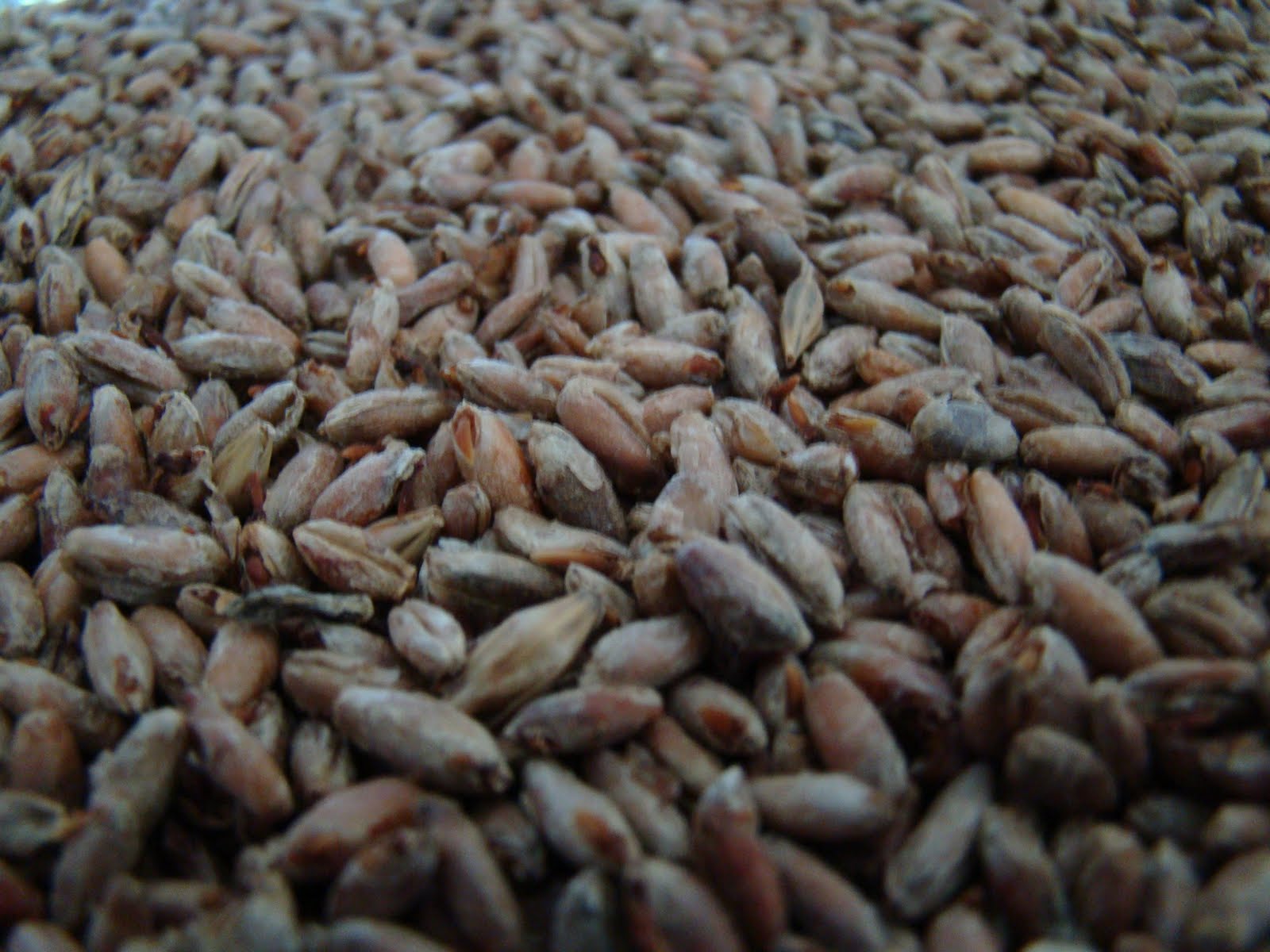
This was the second beer to come out of the kettle on my first brewday back. This was a competition rebrew of my rye saison from this past winter, so not a lot to report on the recipe. The only planned difference was that I added the turbinado to the fermenter as primary slowed rather than adding it to the boil kettle. I actually waited longer than planned for this addition; by the time the turbinado joined the party, the krauesen had completely dropped. The fermenter showed very little activity even with more fermentables added. I gave it a few spins several times a day for about a week and fortunately it finished out properly.
The numbers from BeerSmith have been very different from those on Brewtoad when I first brewed this recipe, most importantly in IBUs and efficiency (versus my OG-to-volume numbers). I may look into the IBU formula settings, but as long as I'm sticking to BeerSmith, I should be able to trust the consistency of my numbers. The efficiency is probably based on different values for the grains between programs; until I get serious enough to input specific numbers for each lot of grain I use, I'll probably stick to relying on BeerSmith.
First taste at bottling displayed a more subdued yeast profile than the previous batch. I pitched very warm, but may have overcooled before fermentation really got going. Next time I may just let WY3711 start in the low 70s and free rise from there; I haven't encountered any issues with it generating fusels or other problematic compounds at elevated temps so far, and hey, it is a saison yeast. We'll see how this iteration does in competition in about a month.
Rye Saison IIa - rebrew for the NV State Homebrewing Championship 2015
Batch size: 5 gallons
Projected OG: 1.053
Projected SRM: 5.5
Projected IBU: 23.6
Boil time: 60 minutes
Brewhouse efficiency: 70%
Recipe
Brewday: 16 August 2015
5 gallons at 11.2P (1.044) (w/o sugar) to fermenter.
Chilled to 78F, 1 minute of pure O2, placed in swamp cooler. Active fermentation 15 hours later at 66F (cooler temp).
Fermented in swamp cooler at 68F; ramped up to 75F after 1 day of active fermentation.
21 August 2015: Active fermentation ended. Added turbinado (in solution). No activity witnessed over 24 hours; may have happened quickly overnight? Agitated regularly for a week; showed a little activity.
Bottled: 2 September 2015
FG: 1.003
ABV: 6.6%
Bottled with 4.3 oz table sugar.
1st Place, Belgian & French Ales; 3rd Place Best of Show: NV State Homebrew Championship 2015
Showing posts with label rye. Show all posts
Saturday, September 5, 2015
Wednesday, May 13, 2015
Rye Saison II tasting
Finally managed to do this long-promised tasting. Of course, I ran out of the first batch before this point, so we're down to a single non-comparative review. To make up for that, though, I'm including highlights from the comments I received on this batch from the 2015 Great Basin Brew Off here in Reno, in which this beer took first place in the Belgian & French Ales category. I also just learned/realized today that this beer--along with the first session IPA--is now eligible for the Nevada State Homebrewing Championship in the fall, so it'll soon be rebrew time for me. I may diversify the grain bill to a degree, but I'm not unhappy with what this beer has become with some age.
=====
Date: 10 May 2015
Venue: Home (Sparks, NV)
Appearance - Hazy golden orange. Medium bubbles collect at the top of the glass, creating a dense, lasting foam stand that leaves a bit of lace.
Smell - Perfume, a little soap, and pear. Maybe a bit of orange. Some spice in the background. Very low hop aroma.
Taste - Dry & spicy; clove, flowery, light fruit (pear again?). Finishes with a solid phenolic kick that definitely says saison. The yeast really shines here. Hint of malt in the back. Nice & clean.
Mouthfeel - Lively, prickly carbonation, but the body is still medium full; thanks, rye malt!
Overall - My early reservations disappeared with age. Spice & phenolics are right on. Maybe I'd go for more malt and/or fruity ester character, but I'm very happy with this simple recipe and looking forward to more saison brewing.
=====
Judges' comments:
Aroma - "Some very nice spiciness up front. A bit of black pepper, honey, tropical fruit."
"Fruity aroma with some grainy maltiness, peppery aroma also. Very high carbonation makes it tingle in the nose."
Appearance - "Golden color, white rocky head that persists..."
"Great color and appearance. Head is a little thinner that I'd like to see, but is persistent."
Flavor - "A bit of sweet graininess in the front, followed with a lot of acid from carbonation. Pineapple. Some nice hop bitterness that lingers. Some spice pops through."
"Spicy flavor with some low hop bittering and flavor, no tartness in flavor. Dry finish by the hop bittering lingers..."
Mouthfeel - "Medium body, high carbonation, no astringency, no tartness, no alcohol warming."
"Carbonation is high, almost too high."
Overall - "Very tasty. High carbonation makes it appear very dry and with the lingering hops it seems a bit too bitter for the style..."
"...Clean with peppery phenols but balanced. Seems a little higher hop rates but still very drinkable..."
=====
Date: 10 May 2015
Venue: Home (Sparks, NV)
Appearance - Hazy golden orange. Medium bubbles collect at the top of the glass, creating a dense, lasting foam stand that leaves a bit of lace.
Smell - Perfume, a little soap, and pear. Maybe a bit of orange. Some spice in the background. Very low hop aroma.
Taste - Dry & spicy; clove, flowery, light fruit (pear again?). Finishes with a solid phenolic kick that definitely says saison. The yeast really shines here. Hint of malt in the back. Nice & clean.
Mouthfeel - Lively, prickly carbonation, but the body is still medium full; thanks, rye malt!
Overall - My early reservations disappeared with age. Spice & phenolics are right on. Maybe I'd go for more malt and/or fruity ester character, but I'm very happy with this simple recipe and looking forward to more saison brewing.
=====
Judges' comments:
"Fruity aroma with some grainy maltiness, peppery aroma also. Very high carbonation makes it tingle in the nose."
Appearance - "Golden color, white rocky head that persists..."
"Great color and appearance. Head is a little thinner that I'd like to see, but is persistent."
Flavor - "A bit of sweet graininess in the front, followed with a lot of acid from carbonation. Pineapple. Some nice hop bitterness that lingers. Some spice pops through."
"Spicy flavor with some low hop bittering and flavor, no tartness in flavor. Dry finish by the hop bittering lingers..."
Mouthfeel - "Medium body, high carbonation, no astringency, no tartness, no alcohol warming."
"Carbonation is high, almost too high."
Overall - "Very tasty. High carbonation makes it appear very dry and with the lingering hops it seems a bit too bitter for the style..."
"...Clean with peppery phenols but balanced. Seems a little higher hop rates but still very drinkable..."
Tuesday, January 27, 2015
Rye Saison II
Not entirely happy with how my recent saison with
WY3711 came out, I did something out of character for me: a
straight-up rebrew with a single change (basically). As I'd blamed my perhaps
overzealous use of Amarillo hops for the prominent plasticky quality of the
first batch, this batch instead received the more traditional Styrian Goldings
for the flavor/aroma component. I also upped the pre-boil volume to finish with
a full five gallons, added Irish moss at the end of the boil, and altered the
fermentation temp a bit, as noted below.
While the brewday caused no fuss, the
fermentation was where things got more exciting for this beer. I brewed this
the day before we drove cross country for the holidays, putting it in a water
bath with my aquarium heater to keep it in the mid-70s during our two-week
trip. Over that time, not only did our car break down twice--both times in
Arizona--but a poorly insulated sprinkler pipe in the attic of the house froze and broke,
running water through half the house for several hours before the fire department turned it off. And where did it break? Just above
the closet in which the saison was fermenting.
Our gracious landlords were very quick to clear
out our belongings from the affected areas of the house and had the water
evacuated. When we returned, I found the carboy still in the cooler, now
drained of water. Miraculously, it was perfectly fine; no evident infection,
with the airlock more or less firmly in place. Once the house drying was
over and we were able to move back in--it'll be months before repairs are
completed--I gave it a few days to let the dust kicked up by the work settle
and then bottled this batch. Tasting the hydrometer sample at bottling, I'm
afraid that the Amarillo may not have been the culprit in creating the quality
I dislike in the first batch; though not exactly the same, it's present in this
second batch. I'll do a side-by-side tasting of these saisons shortly.
Update: Given some aging, the plastic note has disappeared from both batches, leaving not one but two very nice saisons. I'll get into it in the tasting notes.
Rye Saison II (The Styrian)
Batch size: 5.3 gallons
Projected OG: 1.062
Projected SRM: 7.3
Projected IBU: 36.5
Boil time: 60 minutes
Brewhouse efficiency: 71%
Grains/Fermentables
60.0% - 6 lb Weyermann Organic Vienna
30.0% - 3 lb Weyermann Rye
10.0% - 1 lb Turbinado (10 min)
Hops
.5 oz Millennium (13.5%) (60 min)
2 oz Styrian Goldings (4.5%?) (10 min)
Yeast
WY3711 French Saison - 1.5L stirplate starter
Extras
1 tsp Yeast nutrient (10 min)
1 tsp Irish moss (10 min)
Water
Profile: Reno
1 g Gypsum
1 g CaCl
1 mL Lactic acid (88%)
Brewday: 20 December 2014
Mash: 147F for 3 hours
Pre-boil volume: 6.8 gallons
Pre-boil SG (w/o turbinado): 10.4P (1.041)
Chilled to 70F. Aerated for 30 min, pitched 8
hours after KO. Started in water bath @ 55F; raised to ~75F over several hours,
left there for fermentation.
Survived the great NYE flood intact. Sat @
~80F(?) for a few days during cleanup, presumably after active fermentation
finished, then moved to 50F garage for a few days prior to bottling.
Bottled: 10 Jan 2015
FG: 1.006
ABV: 7.5%
Bottled w/ 5.2 oz table sugar.
Tasting: 13 May 2015
Success! Turned out clean, spicy, and fruity with a few months of age. Also took first in Belgian ales in a local comp! Will rebrew this fall for a statewide comp.
1st Place, Belgian & French Ales: Great Basin Brew-Off 2015
Tasting: 13 May 2015
Success! Turned out clean, spicy, and fruity with a few months of age. Also took first in Belgian ales in a local comp! Will rebrew this fall for a statewide comp.
1st Place, Belgian & French Ales: Great Basin Brew-Off 2015
Saturday, November 15, 2014
Amarillo Rye Saison
I've mentioned before that I have a messy history brewing saisons; I've often tried to use the style as a forum for weirdness before really figuring out the base beer. This summer's straightforward iteration was much more successful, though it may have suffered from some oxidation in the bottle. For my second batch of Reno-based homebrew, I continued my exploration of this fascinating, rustic beer.
The biggest influences on wort production were 1) the significant amount of Weyermann rye malt in my stores right now, and 2) an astonishingly good deal on Amarillo pellets at Reno Homebrewer, one of the local supply shops, right after we moved here. I've stuck with Wyeast's French Saison yeast over one of the Dupont strains. Dupont isn't my favourite example of the style and I really like how WY3711 tears right through a wort without fuss.
As an added bonus, it was on this batch that I finally checked the efficacy of my water bath method for stabilizing fermentation temperature. I've never been sure of the temperature differential between the water bath and what's going on in the fermenter during active fermentation. Thus, I didn't really know how much I
needed to drop the water bath temp to maintain my target fermentation temp. With the saison wort actively fermenting (just about high krauesen) in a glass carboy sitting in a ice chest water bath that only came halfway up the batch, the fermentation only ran a half a degree higher than the water bath itself. I'll definitely do more testing, but that's an informative first result.
The beer finished nice and dry--as expected with this yeast--and has been in the bottle for a few weeks now. As beer tends to do, it's evolved a bit over that time. Early on, the leading aromatic and flavour character was somewhat phenol-plastic; it wasn't terrible, but it definitely wasn't the best. That's begun to mellow a little, leaving room for a fruitier character to come through. My initial impression is that the Amarillo and rye (even at 30% of the grist) are not playing dominant roles; it's the yeast that still comes to the fore (see update below). If anything, some of the unpleasantness may have come from the interaction of these ingredients. It may be on the bright side for the cooling fall temperatures, but it helps me remember summer. Complete tasting notes coming soon.
My next saison will be a rebrew of my petit saison noir from a few winters ago, hopefully with the WLP566 I originally used. I don't really have any "house" yeast strains, especially for saisons, though I've really been pulling to get what I want out of WY3711. Based on this current batch, though, I may start to mess around with others to find my preferred mix of fermentation characters. Of course, if this beer continues to mature into something along the lines of my last saison, I may just stay put.
Update: It's hard to keep everything in mind all the time. As I'm sure many of you have, I now recall reading a pile of anecdotal information on the plastic-phenol bombs that can arise when combining Belgian yeasts with American hops. I'd forgotten all about that until yesterday, when I watched Nate Smith's 2014 NHC presentation on using new hop varieties, courtesy of the intrepid Chip Walton of Chop & Brew. I'm considering rebrewing this beer soon with more traditional continental hops--either Styrian Goldings or something noble--to contrast with the current batch and possibly restore my faith in WY3711.
On another note, I really like the concept Nate presented in his talk for doing split batches to compare hops. He produces a large batch (15 gallons) of base wort, then splits it post-boil, running 5 gallons at a time through a hop back with a different hop variety, then through a plate chiller to each fermenter. He then usually follows up with a dry hop that matches the hop back charge for each split. It's a great idea that easily scales for smaller test batches, but requires a couple pieces of equipment I lack. Worth ruminating on for the future...
Update 2: After some time in the bottle, this beer has really turned around for me. While the combination of Amarillo and spicy yeast still throws me a little, the plastic character is gone. Much more drinkable, thankfully! Notes on this beer and the rebrew coming soon.
Autumn Denial - Amarillo Rye Saison
Batch size: 4.5 gallons
Projected OG: 1.063
Projected SRM: 7.3
Projected IBU: 30.1
Boil time: 60 minutes
Brewhouse efficiency: 79%
Grains/Fermentables
60.0% - 6 lb Weyermann Organic Vienna
30.0% - 3 lb Weyermann Rye
10.0% - 1 lb Turbinado (10 min)
Hops
.5 oz Millennium (13.5%) (60 min)
.5 oz Amarillo (8.2%) (10 min)
1.5 oz Amarillo (dry hop - 5 days)
Yeast
WY3711 French Saison - 1.5L stirplate starter
Extras
1 tsp Yeast nutrient (10 min)
Water
Profile: Reno
1 g Gypsum
1 g CaCl
1 mL Lactic acid (88%)
Brewday: 27 September 2014
Mash: 12 qts @ 147F for 3 hours - dropped to 116F
Pre-boil volume: 6 gallons
Pre-boil SG (w/o turbinado): 11P (1.044)
Chilled to 74F. Yeast pitched a little over 24 hours after knockout, once starter flocc’d out. Aerated for 30 minutes before pitching.
Fermented in swamp cooler at 70F for 2 days, then raised 3F/day to 80F.
Dry hops: 14 October 2014
Added loose to primary.
Bottled: 20 October 2014
FG: 1.003
ABV: 7.9%
Bottled with 4.8 oz brown sugar.
The biggest influences on wort production were 1) the significant amount of Weyermann rye malt in my stores right now, and 2) an astonishingly good deal on Amarillo pellets at Reno Homebrewer, one of the local supply shops, right after we moved here. I've stuck with Wyeast's French Saison yeast over one of the Dupont strains. Dupont isn't my favourite example of the style and I really like how WY3711 tears right through a wort without fuss.
As an added bonus, it was on this batch that I finally checked the efficacy of my water bath method for stabilizing fermentation temperature. I've never been sure of the temperature differential between the water bath and what's going on in the fermenter during active fermentation. Thus, I didn't really know how much I
needed to drop the water bath temp to maintain my target fermentation temp. With the saison wort actively fermenting (just about high krauesen) in a glass carboy sitting in a ice chest water bath that only came halfway up the batch, the fermentation only ran a half a degree higher than the water bath itself. I'll definitely do more testing, but that's an informative first result.
The beer finished nice and dry--as expected with this yeast--and has been in the bottle for a few weeks now. As beer tends to do, it's evolved a bit over that time. Early on, the leading aromatic and flavour character was somewhat phenol-plastic; it wasn't terrible, but it definitely wasn't the best. That's begun to mellow a little, leaving room for a fruitier character to come through. My initial impression is that the Amarillo and rye (even at 30% of the grist) are not playing dominant roles; it's the yeast that still comes to the fore (see update below). If anything, some of the unpleasantness may have come from the interaction of these ingredients. It may be on the bright side for the cooling fall temperatures, but it helps me remember summer. Complete tasting notes coming soon.
My next saison will be a rebrew of my petit saison noir from a few winters ago, hopefully with the WLP566 I originally used. I don't really have any "house" yeast strains, especially for saisons, though I've really been pulling to get what I want out of WY3711. Based on this current batch, though, I may start to mess around with others to find my preferred mix of fermentation characters. Of course, if this beer continues to mature into something along the lines of my last saison, I may just stay put.
Update: It's hard to keep everything in mind all the time. As I'm sure many of you have, I now recall reading a pile of anecdotal information on the plastic-phenol bombs that can arise when combining Belgian yeasts with American hops. I'd forgotten all about that until yesterday, when I watched Nate Smith's 2014 NHC presentation on using new hop varieties, courtesy of the intrepid Chip Walton of Chop & Brew. I'm considering rebrewing this beer soon with more traditional continental hops--either Styrian Goldings or something noble--to contrast with the current batch and possibly restore my faith in WY3711.
On another note, I really like the concept Nate presented in his talk for doing split batches to compare hops. He produces a large batch (15 gallons) of base wort, then splits it post-boil, running 5 gallons at a time through a hop back with a different hop variety, then through a plate chiller to each fermenter. He then usually follows up with a dry hop that matches the hop back charge for each split. It's a great idea that easily scales for smaller test batches, but requires a couple pieces of equipment I lack. Worth ruminating on for the future...
Update 2: After some time in the bottle, this beer has really turned around for me. While the combination of Amarillo and spicy yeast still throws me a little, the plastic character is gone. Much more drinkable, thankfully! Notes on this beer and the rebrew coming soon.
Autumn Denial - Amarillo Rye Saison
Batch size: 4.5 gallons
Projected OG: 1.063
Projected SRM: 7.3
Projected IBU: 30.1
Boil time: 60 minutes
Brewhouse efficiency: 79%
Grains/Fermentables
60.0% - 6 lb Weyermann Organic Vienna
30.0% - 3 lb Weyermann Rye
10.0% - 1 lb Turbinado (10 min)
Hops
.5 oz Millennium (13.5%) (60 min)
.5 oz Amarillo (8.2%) (10 min)
1.5 oz Amarillo (dry hop - 5 days)
Yeast
WY3711 French Saison - 1.5L stirplate starter
Extras
1 tsp Yeast nutrient (10 min)
Water
Profile: Reno
1 g Gypsum
1 g CaCl
1 mL Lactic acid (88%)
Brewday: 27 September 2014
Mash: 12 qts @ 147F for 3 hours - dropped to 116F
Pre-boil volume: 6 gallons
Pre-boil SG (w/o turbinado): 11P (1.044)
Chilled to 74F. Yeast pitched a little over 24 hours after knockout, once starter flocc’d out. Aerated for 30 minutes before pitching.
Fermented in swamp cooler at 70F for 2 days, then raised 3F/day to 80F.
Dry hops: 14 October 2014
Added loose to primary.
Bottled: 20 October 2014
FG: 1.003
ABV: 7.9%
Bottled with 4.8 oz brown sugar.
Thursday, November 10, 2011
Scotch Rye - FAIL
There are times when no matter what you do, the brewday goes horribly awry. Then there are times when it’s flawed from the earliest planning stages. This was one of the latter.
I’ve waxed poetic here about my experiences brewing with rye, with all the hassles and pleasures inherent in doing so. My recent all-rye 70/- has actually turned out to be a wonderful beer; I’ll post a tasting on its murky goodness soon. After having success with session-strength beers in this vein, I wanted to go after a big one: a Scotch ale, aka wee heavy. Brewing a big nearly-all-wheat beer last winter went well; the failure on that batch was getting it to carbonate. So I had high hopes for this one.
The recipe was about as simple as it gets: Weyermann rye malt to an OG of 1.075, English hops for bittering to 25 IBUs, and a big slurry of Wyeast 1728. To further increase the maltiness, boil down the first runnings to a thick syrup during the rest of the sparge and boil. If only it was simple in execution.
Trouble started early. As difficult as rye can be to lauter, it’s equally difficult to mill. My faithful drill peters out when I put it to work on wheat and rye, so it means it’s back to the hand crank for those beers. This grist made for a LOT of time spent sweating over my mill. I broke it up into four separate conditioning and milling sessions so I could actually get through it.
The mash went fine, and I was able to run off about a gallon of first runnings to boil down on the stove. And then everything ground to a halt. The mash set, and there was no unsticking it. I decocted several times and infused with the sparge water at a boil to thin the mash and raise the temperature to 170F and higher, but to no effect; only a trickle would come out of the mash tun, and that little bit would stop altogether after a short time. The wort in the mashtun was incredibly viscous, almost like room-temperature molasses; I should’ve photographed it for posterity. My best guess is that especially at its high gravity, the rye wort’s viscosity was just too much for my bazooka screen to handle.
In the end, I ended up scooping out the mashtun, running the mash through a colander to salvage what I could of the batch; plenty of extra particulate ended up in the kettle. After laboriously collecting 5 gallons of wort this way, I went ahead with the boil. After an ugly 75 minutes, it was even thicker than before; the
refractometer sample was almost comically gooey, and the kettle contents were so viscous they wouldn’t pass through my funnel strainer, so I eventually removed it and dumped everything into the primary. On top of this, the first runnings cooked down far enough that they scorched the bottom of the stovetop kettle, so crusty black flecks from that also ended up in the carboy.
After all this, I ended up with 3 ½ gallons of post-boil wort, along with all the stuff I would’ve preferred to leave behind, in a 6-gallon carboy. This didn’t stop this monster from going crazy once the yeast cake it sat atop got to work. I came home a couple days later to find the fermentation temperature had spiked enough to bring the swamp cooler temp to nearly 70F and blow off the airlock. Let me repeat this: 3 ½ gallons of wort blew off the airlock on a 6-gallon carboy. Intense. It had made it this far, so it only seemed fair to clean up carboy, sanitize the opening, and recover it to let the yeast finish out whatever they could still do this thing.
When it came time to transfer to secondary, less than half of what was in the carboy was beer; the larger portion was trub. Even after primary, the viscosity was so great I couldn’t get it through the racking cane. I had to just dump the top layer of beer from the carboy into secondary, a 4-liter wine jug, the only helpful
utensil being the funnel. I didn’t even bother taking a gravity reading; I pitched some rehydrated champagne yeast to hopefully lower the gravity further and thin out this beast. If that doesn’t do it, I may resort to a pedio/brett regimen.
This has been a serious learning experience for me. Possibly barring my experiences with infections, it’s also been my most frustrating batch. I still have about a third of a sack of Weyermann rye to go; what all I’ll make with it I’m not sure, but it won’t be another beer like this. I’ve had success with all-rye beers as well as with high-gravity beers; I plan to brew more of both, but I probably won’t combine these two concepts again. Every batch has something to teach; some just deliver their messages more indelibly than others. For the record, I do NOT recommend this recipe; it's here for posterity. It definitely deserves a "brewer beware" mark of some type; if I come up with a good one, it'll appear here.
Scotch Rye
Batch size: 3.5 gallons
Projected OG: 1.091
Projected SRM: 14.3 (not accounting for boiled-down first runnings)
Projected IBU: 39.3
Boil time: 75 minutes
Brewhouse efficiency: 55%
Grains
100% - 20 lb Rye
Hops
1 oz Progress (6.2%) (75 min)
.5 oz Northdown (7.2%) (75 min)
Yeast
WY1728 Scottish Ale yeast - cake from Toasted Rye
Extras
1 tsp Irish moss (30 min)
1 tsp Yeast nutrient (10 min)
Water additions (mash)
15 qts RO water
1 g Gypsum
1 g Salt
Brewday: 16 October 2011
Mash-in: 152F for 60 minutes
Pre-boil volume: 5 gallons
Pre-boil SG: 19P (1.079)
First gallon of first runnings reduced to a thick syrup on the stove, charring to a degree; added back before boil
HELLACIOUS LAUTER FAIL. Multiple decoctions & infusions did little. Eventually scooped & crudely strained through a colander to 5 gallons before starting boil; refractometer sample was unbelievably viscous. Was so thick it wouldn’t even go through strainer, so everything went into the fermenter
Fermented in swamp cooler at 55-60F ambient
18 October 2011: Even though the beer only filled about half the carboy, it blew off the airlock and spiked the swamp cooler temp to 68F. Cleaned up and replaced airlock with tin foil, back in swamp cooler at 55-60F
22 October 2011: Massive amount of particulate matter finally settling out; rye keeps beer from clearing, but there’s now liquid separate from the break, hops, and other junk in the carboy. Out of swamp cooler at 65F ambient
Bottled: 17 February 2012
FG: unmeasured
Still incredibly thick; couldn’t start a siphon and ended up pouring it into the bottles.
Bottled 3/4 gallon with .6 oz table sugar and rehydrated champagne yeast.
I’ve waxed poetic here about my experiences brewing with rye, with all the hassles and pleasures inherent in doing so. My recent all-rye 70/- has actually turned out to be a wonderful beer; I’ll post a tasting on its murky goodness soon. After having success with session-strength beers in this vein, I wanted to go after a big one: a Scotch ale, aka wee heavy. Brewing a big nearly-all-wheat beer last winter went well; the failure on that batch was getting it to carbonate. So I had high hopes for this one.
The recipe was about as simple as it gets: Weyermann rye malt to an OG of 1.075, English hops for bittering to 25 IBUs, and a big slurry of Wyeast 1728. To further increase the maltiness, boil down the first runnings to a thick syrup during the rest of the sparge and boil. If only it was simple in execution.
Trouble started early. As difficult as rye can be to lauter, it’s equally difficult to mill. My faithful drill peters out when I put it to work on wheat and rye, so it means it’s back to the hand crank for those beers. This grist made for a LOT of time spent sweating over my mill. I broke it up into four separate conditioning and milling sessions so I could actually get through it.
The mash went fine, and I was able to run off about a gallon of first runnings to boil down on the stove. And then everything ground to a halt. The mash set, and there was no unsticking it. I decocted several times and infused with the sparge water at a boil to thin the mash and raise the temperature to 170F and higher, but to no effect; only a trickle would come out of the mash tun, and that little bit would stop altogether after a short time. The wort in the mashtun was incredibly viscous, almost like room-temperature molasses; I should’ve photographed it for posterity. My best guess is that especially at its high gravity, the rye wort’s viscosity was just too much for my bazooka screen to handle.
In the end, I ended up scooping out the mashtun, running the mash through a colander to salvage what I could of the batch; plenty of extra particulate ended up in the kettle. After laboriously collecting 5 gallons of wort this way, I went ahead with the boil. After an ugly 75 minutes, it was even thicker than before; the
refractometer sample was almost comically gooey, and the kettle contents were so viscous they wouldn’t pass through my funnel strainer, so I eventually removed it and dumped everything into the primary. On top of this, the first runnings cooked down far enough that they scorched the bottom of the stovetop kettle, so crusty black flecks from that also ended up in the carboy.
After all this, I ended up with 3 ½ gallons of post-boil wort, along with all the stuff I would’ve preferred to leave behind, in a 6-gallon carboy. This didn’t stop this monster from going crazy once the yeast cake it sat atop got to work. I came home a couple days later to find the fermentation temperature had spiked enough to bring the swamp cooler temp to nearly 70F and blow off the airlock. Let me repeat this: 3 ½ gallons of wort blew off the airlock on a 6-gallon carboy. Intense. It had made it this far, so it only seemed fair to clean up carboy, sanitize the opening, and recover it to let the yeast finish out whatever they could still do this thing.
When it came time to transfer to secondary, less than half of what was in the carboy was beer; the larger portion was trub. Even after primary, the viscosity was so great I couldn’t get it through the racking cane. I had to just dump the top layer of beer from the carboy into secondary, a 4-liter wine jug, the only helpful
utensil being the funnel. I didn’t even bother taking a gravity reading; I pitched some rehydrated champagne yeast to hopefully lower the gravity further and thin out this beast. If that doesn’t do it, I may resort to a pedio/brett regimen.
This has been a serious learning experience for me. Possibly barring my experiences with infections, it’s also been my most frustrating batch. I still have about a third of a sack of Weyermann rye to go; what all I’ll make with it I’m not sure, but it won’t be another beer like this. I’ve had success with all-rye beers as well as with high-gravity beers; I plan to brew more of both, but I probably won’t combine these two concepts again. Every batch has something to teach; some just deliver their messages more indelibly than others. For the record, I do NOT recommend this recipe; it's here for posterity. It definitely deserves a "brewer beware" mark of some type; if I come up with a good one, it'll appear here.
Scotch Rye
Batch size: 3.5 gallons
Projected OG: 1.091
Projected SRM: 14.3 (not accounting for boiled-down first runnings)
Projected IBU: 39.3
Boil time: 75 minutes
Brewhouse efficiency: 55%
100% - 20 lb Rye
Hops
1 oz Progress (6.2%) (75 min)
.5 oz Northdown (7.2%) (75 min)
Yeast
WY1728 Scottish Ale yeast - cake from Toasted Rye
Extras
1 tsp Irish moss (30 min)
1 tsp Yeast nutrient (10 min)
Water additions (mash)
15 qts RO water
1 g Gypsum
1 g Salt
Brewday: 16 October 2011
Mash-in: 152F for 60 minutes
Pre-boil volume: 5 gallons
Pre-boil SG: 19P (1.079)
First gallon of first runnings reduced to a thick syrup on the stove, charring to a degree; added back before boil
HELLACIOUS LAUTER FAIL. Multiple decoctions & infusions did little. Eventually scooped & crudely strained through a colander to 5 gallons before starting boil; refractometer sample was unbelievably viscous. Was so thick it wouldn’t even go through strainer, so everything went into the fermenter
Fermented in swamp cooler at 55-60F ambient
18 October 2011: Even though the beer only filled about half the carboy, it blew off the airlock and spiked the swamp cooler temp to 68F. Cleaned up and replaced airlock with tin foil, back in swamp cooler at 55-60F
22 October 2011: Massive amount of particulate matter finally settling out; rye keeps beer from clearing, but there’s now liquid separate from the break, hops, and other junk in the carboy. Out of swamp cooler at 65F ambient
Bottled: 17 February 2012
FG: unmeasured
Still incredibly thick; couldn’t start a siphon and ended up pouring it into the bottles.
Bottled 3/4 gallon with .6 oz table sugar and rehydrated champagne yeast.
Saturday, October 15, 2011
Rye 70/-
The product of my second SLC brewday was two session-strength beers, one Scottish and the other Belgian in origin. Of course, that doesn’t mean either one was particularly to style. The first was a Scottish 70 shilling (70/-); the other was a petit saison, on which I’ll post shortly.
For those who don’t know of it, the shilling system denotes alcoholic strength based on the historical price of the beer per barrel, with 60/- and 90/- being the common low and high ends, respectively (though Noonan’s book on the style mentions numbers low as 42/- and as high as 140/-). According to Noonan, Scottish beers of previous centuries were related to their English counterparts, but leaned more toward the maltier end due to longer boil times (producing more melanoidins and thus more caramel flavours), higher final gravities, and reduced hopping rates. There is some debate (see the comments at the bottom) as to how accurate this description is for historical Scottish beers; at least from a current American homebrewing standpoint (via the BJCP guidelines), calling a beer a 70/- denotes an amber, low-strength (under 4%), malty ale.
The big deviation from the Scottish norm here is that this beer was made entirely of rye malt; this and the beer that will go on this yeast cake are the principal reasons I bought a full sack of Weyermann rye when we moved to town. The high viscosity and slickness of rye worts struck me as particularly fitting the heavier bodied, malt-forward nature of the style; in addition, the higher mash temperatures that encourage Scottish ale’s lower attenuation should also aid in keeping the rye proteins from becoming too sticky and causing lautering problems.
Scottish ale grists are often very simple; to keep with this but add some complexity to the beer, I toasted a pound of rye malt at home, half dry toasted for a biscuit-like style and the other half wet as “caramel” rye (which is actually sold as Cara Rye by Weyermann, I’ve since learned). The flavour of these grains on their own was excellent: nutty and slightly sweet, respectively. I’m looking forward to see how they taste in the finished product. A touch of chocolate rye for colour, a modest bittering charge of hops, a fresh packet of Wyeast’s Scottish Ale yeast, and we were rolling.
This beer was originally supposed to be an even lighter 60/-, but my efficiency ended up much higher than expected (ridiculously high, actually; my refractometer still looks to be calibrated). My past with the dreaded rye lauter has seen good, bad, and ugly, and the closest I have to a “trick” for rye-heavy mashes is to get the temperature way up before lautering. Usually, I do two batch sparges; this time, I ran off whatever would come out on its own as first runnings, then brought my first sparge water to boiling and added it right into the mash for a mashout at 170F. The lauter came off without a hitch, though slow as expected with such a viscous wort.
Primary fermentation kicked off quickly and subsided after just a few days. Following a day agitating it at room temp to make sure it had finished out, it’s been crash cooling until tomorrow, when I’ll bottle it and put the next beer in the series, a Scotch ale (aka wee heavy), on the yeast.
Toasted Rye
Batch size: 4.75 gallons
Projected OG: 1.037
Projected SRM: 10
Projected IBU: 15.3
Boil time: 60 minutes
Brewhouse efficiency: 95%???
Grains
81.6% - 5 lb Rye
8.2% - 8 oz Caramel Rye (home-toasted)
8.2% - 8 oz Biscuit Rye (home-toasted)
2.0% - 2 oz Chocolate Rye
Hops
.5 oz Challenger (7.2%) (60 min)
Yeast
1 pkg WY1728 Scottish Ale yeast (no starter)
Water additions (mash)
4 qts RO water
Brewday: 2 October 2011
Mash-in: 9 qts @ 158F for 60 minutes
1st sparge: 10 qts @ 212F
2nd sparge: 10 qts @ 212F
Pre-boil volume: 6 gallons
Pre-boil SG: 7.9P (1.031)
Used the first sparge as a mashout to reach the proper temp to keep the rye from getting sticky.
Started in swamp cooler at 57F ambient; 60-65F once fermentation started
13 October 2011: Krausen dropped; brought to ambient (70F) for a day to make sure it was finished, followed by several days crash cooling
Bottled: 16 October 2011FG: 1.013 (1.014 @ 35F)
ABV: 3.1%
Bottled with 2.6 oz table sugar
Hydrometer sample tasted very watery, unfortunately
For those who don’t know of it, the shilling system denotes alcoholic strength based on the historical price of the beer per barrel, with 60/- and 90/- being the common low and high ends, respectively (though Noonan’s book on the style mentions numbers low as 42/- and as high as 140/-). According to Noonan, Scottish beers of previous centuries were related to their English counterparts, but leaned more toward the maltier end due to longer boil times (producing more melanoidins and thus more caramel flavours), higher final gravities, and reduced hopping rates. There is some debate (see the comments at the bottom) as to how accurate this description is for historical Scottish beers; at least from a current American homebrewing standpoint (via the BJCP guidelines), calling a beer a 70/- denotes an amber, low-strength (under 4%), malty ale.
The big deviation from the Scottish norm here is that this beer was made entirely of rye malt; this and the beer that will go on this yeast cake are the principal reasons I bought a full sack of Weyermann rye when we moved to town. The high viscosity and slickness of rye worts struck me as particularly fitting the heavier bodied, malt-forward nature of the style; in addition, the higher mash temperatures that encourage Scottish ale’s lower attenuation should also aid in keeping the rye proteins from becoming too sticky and causing lautering problems.
Scottish ale grists are often very simple; to keep with this but add some complexity to the beer, I toasted a pound of rye malt at home, half dry toasted for a biscuit-like style and the other half wet as “caramel” rye (which is actually sold as Cara Rye by Weyermann, I’ve since learned). The flavour of these grains on their own was excellent: nutty and slightly sweet, respectively. I’m looking forward to see how they taste in the finished product. A touch of chocolate rye for colour, a modest bittering charge of hops, a fresh packet of Wyeast’s Scottish Ale yeast, and we were rolling.
This beer was originally supposed to be an even lighter 60/-, but my efficiency ended up much higher than expected (ridiculously high, actually; my refractometer still looks to be calibrated). My past with the dreaded rye lauter has seen good, bad, and ugly, and the closest I have to a “trick” for rye-heavy mashes is to get the temperature way up before lautering. Usually, I do two batch sparges; this time, I ran off whatever would come out on its own as first runnings, then brought my first sparge water to boiling and added it right into the mash for a mashout at 170F. The lauter came off without a hitch, though slow as expected with such a viscous wort.
Primary fermentation kicked off quickly and subsided after just a few days. Following a day agitating it at room temp to make sure it had finished out, it’s been crash cooling until tomorrow, when I’ll bottle it and put the next beer in the series, a Scotch ale (aka wee heavy), on the yeast.
Toasted Rye
Batch size: 4.75 gallons
Projected OG: 1.037
Projected SRM: 10
Projected IBU: 15.3
Boil time: 60 minutes
Brewhouse efficiency: 95%???
Grains
8.2% - 8 oz Caramel Rye (home-toasted)
8.2% - 8 oz Biscuit Rye (home-toasted)
2.0% - 2 oz Chocolate Rye
Hops
.5 oz Challenger (7.2%) (60 min)
Yeast
1 pkg WY1728 Scottish Ale yeast (no starter)
Water additions (mash)
4 qts RO water
Brewday: 2 October 2011
Mash-in: 9 qts @ 158F for 60 minutes
1st sparge: 10 qts @ 212F
2nd sparge: 10 qts @ 212F
Pre-boil volume: 6 gallons
Pre-boil SG: 7.9P (1.031)
Used the first sparge as a mashout to reach the proper temp to keep the rye from getting sticky.
Started in swamp cooler at 57F ambient; 60-65F once fermentation started
13 October 2011: Krausen dropped; brought to ambient (70F) for a day to make sure it was finished, followed by several days crash cooling
Bottled: 16 October 2011FG: 1.013 (1.014 @ 35F)
ABV: 3.1%
Bottled with 2.6 oz table sugar
Hydrometer sample tasted very watery, unfortunately
Monday, October 3, 2011
Robust Rye Porter
The second beer of my first Salt Lake brewday was another dark beer to welcome the coming cooler months (which haven’t really made much of an appearance here yet). I love porters with good chocolate notes and restrained but present roast; Great Lakes Edmund Fitzgerald and Founders Porter are always welcome in my glass. Along with those specifications, I also wanted to include a (nearly obligatory now) significant portion of rye. This is a recipe I’ve had on the books for quite some time, and I’m happy to have had the opportunity to finally brew it.
The base of this beer was equal parts 2-row and rye malt, with nearly as much brown malt for a “classic” porter toastiness. The 2-row I got here is from Malteurop; according to my new LHBS, they preferred it in a side-by-side brewing with Rahr’s 2-row, which is a bit more expensive; at some point I’ll make something lighter and more pale malt-forward to check for myself, but for now it’s worked out just fine. The small amount of black patent and American chocolate (lighter in colour and flavour than UK chocolate) add to that restrained roast presence. Northern Brewer hops provide solid bitterness and perhaps a touch of mint, and the WLP007 ferments out well.
Other than some mash hangups in the second sparge, the brewing went well. I got a late start with the starter--sadly, the pun is unintended--so in lieu of waiting too long after brewing to pitch, I picked up a second vial of yeast to start off things, then pitched the starter when it was ready to go. The higher gravity (as compared to the dry stout) will help to pass the coming colder nights. I love hoppy beers, but I’m looking forward to enjoying these dark, malty treats as the leaves change.
Robust Rye Porter
Batch size: 5 gallons
Projected OG: 1.060
Projected SRM: 33.3
Projected IBU: 45.6
Boil time: 60 minutes
Brewhouse efficiency: 80%
Grains
34.8% - 4 lb 2-row
34.8% - 4 lb Rye
26% - 3 lb Brown malt
2.2% - 4 oz Black patent
2.2% - 4 oz American chocolate
Hops
1 oz Northern Brewer (10.5%) (60 min)
.5 oz Northern Brewer (15 min)
Yeast
WLP007 Dry English Ale - 3.5L starter
Water additions (mash)
6 qts RO water
Brewday: 3 September 2011
Mash-in: 14.5 qts @ 154F for 2 hours - dropped to 148F
Pre-boil volume: 6 gallons
Pre-boil SG: 11.8P (1.047)
Into swamp cooler at 65F; waiting for starter to settle out for pitching.
Still waiting for the starter to finish out 20 hours later, so pitched a second (much fresher) tube of 007 for now.
Pitched the starter 27 hours after chilling.
Bottled: 24 September 2011
FG: 1.018
ABV: 5.5%
Bottled 4.8 gallons with 3.5 oz table sugar.
The base of this beer was equal parts 2-row and rye malt, with nearly as much brown malt for a “classic” porter toastiness. The 2-row I got here is from Malteurop; according to my new LHBS, they preferred it in a side-by-side brewing with Rahr’s 2-row, which is a bit more expensive; at some point I’ll make something lighter and more pale malt-forward to check for myself, but for now it’s worked out just fine. The small amount of black patent and American chocolate (lighter in colour and flavour than UK chocolate) add to that restrained roast presence. Northern Brewer hops provide solid bitterness and perhaps a touch of mint, and the WLP007 ferments out well.
Other than some mash hangups in the second sparge, the brewing went well. I got a late start with the starter--sadly, the pun is unintended--so in lieu of waiting too long after brewing to pitch, I picked up a second vial of yeast to start off things, then pitched the starter when it was ready to go. The higher gravity (as compared to the dry stout) will help to pass the coming colder nights. I love hoppy beers, but I’m looking forward to enjoying these dark, malty treats as the leaves change.
Robust Rye Porter
Batch size: 5 gallons
Projected OG: 1.060
Projected SRM: 33.3
Projected IBU: 45.6
Boil time: 60 minutes
Brewhouse efficiency: 80%
Grains
34.8% - 4 lb 2-row
34.8% - 4 lb Rye
26% - 3 lb Brown malt
2.2% - 4 oz Black patent
2.2% - 4 oz American chocolate
Hops
1 oz Northern Brewer (10.5%) (60 min)
.5 oz Northern Brewer (15 min)
Yeast
WLP007 Dry English Ale - 3.5L starter
Water additions (mash)
6 qts RO water
Brewday: 3 September 2011
Mash-in: 14.5 qts @ 154F for 2 hours - dropped to 148F
Pre-boil volume: 6 gallons
Pre-boil SG: 11.8P (1.047)
Into swamp cooler at 65F; waiting for starter to settle out for pitching.
Still waiting for the starter to finish out 20 hours later, so pitched a second (much fresher) tube of 007 for now.
Pitched the starter 27 hours after chilling.
Bottled: 24 September 2011
FG: 1.018
ABV: 5.5%
Bottled 4.8 gallons with 3.5 oz table sugar.
Friday, September 9, 2011
Home toasting malt
Three years ago I started growing hops in an effort to take a more active role in controlling my ingredients. While we lack the real estate (and time and resources) to do any growing and malting of grain, we do have the ability to tweak some malt by home toasting it.
As previous posts indicate, malted rye is a grain in which I have a great interest. I have a couple all-rye beers on the schedule in the next month or so, and toasting a small amount of rye malt sounded like a good proposition to add additional character to what will be essentially a Scottish 60/-. As there won’t be much to the grist of this beer–just over six pounds total–I toasted just one pound to use as an accent. Half a pound was dry toasted for a biscuit flavour; the other half pound I prepared as a light crystal malt.
A number of sources delve into toasting your own malt, including Randy Mosher’s ever-excellent Radical Brewing and John Palmer’s trusty How To Brew. I followed Palmer’s method this time out, which is pretty
straightforward. There are other, more involved methods out there for making crystal malt that most likely create a sweeter, more accurately caramel flavour; depending how this batch turns out, I may try one of them next time. To be fair, Palmer doesn't stipulate this as the way to make crystal malt, but as a way to produce more caramel flavour than dry toasting. Smelling and tasting the grain just out of the oven and over the last couple days, though, I’m pretty happy with what I have right now.
The rye filled the house with an incredible bready, nutty aroma as it was toasted; I’d recommend doing this just for the domestic aromatics alone. The dry toasted rye had a pleasing, light roasty/toasty flavour, though shy of a Biscuit or Victory malt. The crystal rye was sweet, nutty, and had a touch of fruitiness to it. I’ll be very interested to see how these grains impact this very uncomplicated grain bill.
For dry toasted malt: Make a shallow grain bed in a foil-lined pan and put in 350F oven for 30 minutes, turning grain after 15 minutes.
For crystal malt (~20L): Soak grain in filtered water for 1 hour. Strain, then make a shallow grain bed in a foil-lined pan and put in 350F oven for 1 hour, turning grain every 15 minutes.
Most sources recommend storing the toasted grain and agitating it daily for two weeks before using it to allow the harsher aromatics to dissipate.
As previous posts indicate, malted rye is a grain in which I have a great interest. I have a couple all-rye beers on the schedule in the next month or so, and toasting a small amount of rye malt sounded like a good proposition to add additional character to what will be essentially a Scottish 60/-. As there won’t be much to the grist of this beer–just over six pounds total–I toasted just one pound to use as an accent. Half a pound was dry toasted for a biscuit flavour; the other half pound I prepared as a light crystal malt.
A number of sources delve into toasting your own malt, including Randy Mosher’s ever-excellent Radical Brewing and John Palmer’s trusty How To Brew. I followed Palmer’s method this time out, which is pretty
straightforward. There are other, more involved methods out there for making crystal malt that most likely create a sweeter, more accurately caramel flavour; depending how this batch turns out, I may try one of them next time. To be fair, Palmer doesn't stipulate this as the way to make crystal malt, but as a way to produce more caramel flavour than dry toasting. Smelling and tasting the grain just out of the oven and over the last couple days, though, I’m pretty happy with what I have right now.
The rye filled the house with an incredible bready, nutty aroma as it was toasted; I’d recommend doing this just for the domestic aromatics alone. The dry toasted rye had a pleasing, light roasty/toasty flavour, though shy of a Biscuit or Victory malt. The crystal rye was sweet, nutty, and had a touch of fruitiness to it. I’ll be very interested to see how these grains impact this very uncomplicated grain bill.
For dry toasted malt: Make a shallow grain bed in a foil-lined pan and put in 350F oven for 30 minutes, turning grain after 15 minutes.
For crystal malt (~20L): Soak grain in filtered water for 1 hour. Strain, then make a shallow grain bed in a foil-lined pan and put in 350F oven for 1 hour, turning grain every 15 minutes.
Most sources recommend storing the toasted grain and agitating it daily for two weeks before using it to allow the harsher aromatics to dissipate.
Tuesday, August 2, 2011
Sour Rye Saison
For my last Chicago brewday, I was looking to make a beer that would refresh us as we unpack in our new place in Salt Lake City. Given how well last summer’s saison went over, another one, lower in gravity, was in order. Rye has found a solid place in my brewery over the last year, adding its spiciness and slick mouthfeel, so I wanted to make it a major player in this recipe.
I was also intrigued by how the Cherry Sour turned out following a long sour worting; it produced a prominent, very clean lactic sourness. While using a neutral ale yeast made for a fairly one-dimensional end product, it seemed this method, applied gently, could add another layer of complexity to what the saison yeast would contribute. I had just a couple ounces of Amarillo hops left to help build on the citrus character of the sour worting; to augment this I made my first foray into the world of New Zealand hops by adding an ounce of Pacific Jade, known for their citrus and black pepper notes (which should go well with the yeast).
When I started using rye, I followed conventional wisdom in keeping the percentage low to limit its purported gumminess from stopping up the mash. After reading about a beer made with 100% malted rye, I went bigger; I did an English bitter made almost entirely of rye, and from then on I haven’t had any of the mashing/sparging problems attributed to rye (or wheat, for that matter). Or at least I hadn’t until this brewday.
I mashed low to keep the final beer dry, as I did with the previous saison; despite the high percentage of rye in the mash and being in the temp range that can make its proteins so notoriously gummy, my experience with my system gave me confidence that I’d come sailing through this without incident. On top of that, my poorly insulated mashtun lost almost 15 degrees (F) during the long mash. The time came to start the vorlauf; I attached the hose, opened up the valve per usual, and after the first small surge, it slowed to a trickle. Minutes
went by, and next to nothing came out. I stirred the mash, I blew back through the tube, but nothing got it moving. So I resorted to a method I consider fairly un-French; I decocted.
This traditional German technique is used to raise the mash temperature by drawing off a thick portion of the mash (lots of grain, a little wort), boiling it, then adding it back to the main mash; it also tends to increase mash efficiency and produce maltier beers. I’ve only decocted once, to add extra maltiness to a small batch of weizenbock; in this case, though, I figured raising the mash temperature to “unglue” the rye proteins was my best bet and this was the only option I had for doing that on my setup. Unfortunately, the first decoction of just a couple quarts of thick mash didn’t have much effect at all, not even getting it back up to mash temp. So I doubled the size for the second decoction, which bumped up the temp to 160F. And the runoff was still interminably slow.
Eventually, I just brought the water for the first sparge to a boil and put it in on top of the mash, bringing the temp to 176F. That’s hot enough to start extracting unwanted tannins from the grains, but I hoped it would also be hot enough unstick the damn rye. And the runoff was STILL slow...but moving. The brewday ended up much longer than planned, but I was able to collect my runnings and get the thing to the boil. Between the Munich malt and the decoctions, this will probably fall on the maltier side of things than saisons normally do.
Of course, since I was sour worting this beer, I wasn’t even close to the end. After a 20-minute boil to get past the hot break and sterilize the wort, I cooled it down to about 115F, pitched my lacto starter, covered it with plastic wrap, and put it in the swamp cooler to let the bugs stew just overnight. The next day I found that I must’ve done a pretty poor job keeping the plastic wrap right down on the wort (to inhibit unwanted bugs that need oxygen, like acetobacter), as the wort had a frizzy, frothy head unlike the thick, controlled scum that showed up on the Cherry Sour. Still, it didn’t smell out of bounds, so to speak, and it was about to get a full 60-minute boil, so I didn’t worry too much about it.
The normal boil proceeded without incident, other than it seemed impossible to keep this one from boiling over; even though I’d boiled it past the hot break before souring, the head as it came to boil was immense, it still billowed up despite spritzing with a water bottle and keeping the flame low, and it persisted to some degree through the end of the boil. I chilled and set it aside, but was unable to get back to it for almost a full day. Eager to avoid a double souring, I brought it back to a short boil and chilled it again; on reheating, it had
a really wonderful, gentle fruit aroma that I attribute to the late hops.
Primary fermentation chugged away, and the dry hops went in right on top when it subsided. I’d only planned to have them in there for about 5 days, but with us busy packing, painting and cleaning for the imminent move, I didn’t have a chance to bottle before leaving for my music festival. By the time we get back, they will have had 3 ½ weeks of contact time. After all the hassle of this brew session, I’m looking forward to bottling this one, along with the Russian imperial stout, which has been sitting on oak for 2 months now.
Sour Rye Saison - Farmhouse ale with lacto starter
Batch size: 5.5 gallons
Projected OG: 1.048
Projected SRM: 8.4
Projected IBU: 28.9
Boil time: 60 minutes
Brewhouse efficiency: 80%
Grains
50% - 5 lb Rye malt
50% - 5 lb Munich
Hops
1 oz Amarillo (7.8%) (20 min)
.5 oz Amarillo (10 min)
.5 oz Pacific Jade (13.4%) (10 min)
.5 oz Amarillo (Dry hop 5 days)
.5 oz Pacific Jade (Dry hop 5 days)
Yeast
Sour starter (pre-boil)
WY3711 French Saison - 3L starter from stirplate (primary)
Extras
1 tsp Irish moss (10 min)
1 tsp Yeast nutrient (10 min)
Water additions (mash)
2 g Chalk
Brewday: 2 July 2011
Mash-in: 12.5 qts @ 148F for 2 hours - added .5 qt to bring down temp
Temp drop to 134F; viscous & very slow runoff
1st decoction - 2 qts thick mash boiled for 5 minutes; raised temp to 144F
2nd decoction - 4 qts thick mash boiled for 5 minutes; raised temp to 160F
Sparge still stuck; eventually just added 1st sparge in with mash
1st sparge: 10 qts @ 212F - raised temp to 176F
STILL running off super slow!
Pre-boil volume: 7 gallons
Pre-sour OG: 10.8 P (1.044)
Boiled through hot break, cooled to 115F, pitched sour starter, covered in plastic wrap, kept warm in swamp cooler overnight
3 July 2011: Following 20 hours souring, normal 60-minute boil
4 July 2011: Didn’t pitch yeast yesterday; brought back to boil, cooled again, aerated, pitched - wonderful fruity aromatics on reheating
Fermentation started in basement at ambient (68F) for 2 days, then brought upstairs to ramp up
Dry hop: 11 July 2011
Bottled: 6 August 2011
FG: 1.010
ABV: 5%
Sample nicely tangy, but dominates the yeast; next time only sour a portion of the wort
Bottled with 5.5 oz table sugar
First tasting: 20 August 2011
Bright and fruity from the souring, but not overly so. Good breadiness as it warms, but sourness overshadows the yeast character.
I was also intrigued by how the Cherry Sour turned out following a long sour worting; it produced a prominent, very clean lactic sourness. While using a neutral ale yeast made for a fairly one-dimensional end product, it seemed this method, applied gently, could add another layer of complexity to what the saison yeast would contribute. I had just a couple ounces of Amarillo hops left to help build on the citrus character of the sour worting; to augment this I made my first foray into the world of New Zealand hops by adding an ounce of Pacific Jade, known for their citrus and black pepper notes (which should go well with the yeast).
When I started using rye, I followed conventional wisdom in keeping the percentage low to limit its purported gumminess from stopping up the mash. After reading about a beer made with 100% malted rye, I went bigger; I did an English bitter made almost entirely of rye, and from then on I haven’t had any of the mashing/sparging problems attributed to rye (or wheat, for that matter). Or at least I hadn’t until this brewday.
I mashed low to keep the final beer dry, as I did with the previous saison; despite the high percentage of rye in the mash and being in the temp range that can make its proteins so notoriously gummy, my experience with my system gave me confidence that I’d come sailing through this without incident. On top of that, my poorly insulated mashtun lost almost 15 degrees (F) during the long mash. The time came to start the vorlauf; I attached the hose, opened up the valve per usual, and after the first small surge, it slowed to a trickle. Minutes
went by, and next to nothing came out. I stirred the mash, I blew back through the tube, but nothing got it moving. So I resorted to a method I consider fairly un-French; I decocted.
This traditional German technique is used to raise the mash temperature by drawing off a thick portion of the mash (lots of grain, a little wort), boiling it, then adding it back to the main mash; it also tends to increase mash efficiency and produce maltier beers. I’ve only decocted once, to add extra maltiness to a small batch of weizenbock; in this case, though, I figured raising the mash temperature to “unglue” the rye proteins was my best bet and this was the only option I had for doing that on my setup. Unfortunately, the first decoction of just a couple quarts of thick mash didn’t have much effect at all, not even getting it back up to mash temp. So I doubled the size for the second decoction, which bumped up the temp to 160F. And the runoff was still interminably slow.
Eventually, I just brought the water for the first sparge to a boil and put it in on top of the mash, bringing the temp to 176F. That’s hot enough to start extracting unwanted tannins from the grains, but I hoped it would also be hot enough unstick the damn rye. And the runoff was STILL slow...but moving. The brewday ended up much longer than planned, but I was able to collect my runnings and get the thing to the boil. Between the Munich malt and the decoctions, this will probably fall on the maltier side of things than saisons normally do.
Of course, since I was sour worting this beer, I wasn’t even close to the end. After a 20-minute boil to get past the hot break and sterilize the wort, I cooled it down to about 115F, pitched my lacto starter, covered it with plastic wrap, and put it in the swamp cooler to let the bugs stew just overnight. The next day I found that I must’ve done a pretty poor job keeping the plastic wrap right down on the wort (to inhibit unwanted bugs that need oxygen, like acetobacter), as the wort had a frizzy, frothy head unlike the thick, controlled scum that showed up on the Cherry Sour. Still, it didn’t smell out of bounds, so to speak, and it was about to get a full 60-minute boil, so I didn’t worry too much about it.
The normal boil proceeded without incident, other than it seemed impossible to keep this one from boiling over; even though I’d boiled it past the hot break before souring, the head as it came to boil was immense, it still billowed up despite spritzing with a water bottle and keeping the flame low, and it persisted to some degree through the end of the boil. I chilled and set it aside, but was unable to get back to it for almost a full day. Eager to avoid a double souring, I brought it back to a short boil and chilled it again; on reheating, it had
a really wonderful, gentle fruit aroma that I attribute to the late hops.
Primary fermentation chugged away, and the dry hops went in right on top when it subsided. I’d only planned to have them in there for about 5 days, but with us busy packing, painting and cleaning for the imminent move, I didn’t have a chance to bottle before leaving for my music festival. By the time we get back, they will have had 3 ½ weeks of contact time. After all the hassle of this brew session, I’m looking forward to bottling this one, along with the Russian imperial stout, which has been sitting on oak for 2 months now.
Sour Rye Saison - Farmhouse ale with lacto starter
Batch size: 5.5 gallons
Projected OG: 1.048
Projected SRM: 8.4
Projected IBU: 28.9
Boil time: 60 minutes
Brewhouse efficiency: 80%
Grains
50% - 5 lb Rye malt
50% - 5 lb Munich
1 oz Amarillo (7.8%) (20 min)
.5 oz Amarillo (10 min)
.5 oz Pacific Jade (13.4%) (10 min)
.5 oz Amarillo (Dry hop 5 days)
.5 oz Pacific Jade (Dry hop 5 days)
Yeast
Sour starter (pre-boil)
WY3711 French Saison - 3L starter from stirplate (primary)
Extras
1 tsp Irish moss (10 min)
1 tsp Yeast nutrient (10 min)
Water additions (mash)
2 g Chalk
Brewday: 2 July 2011
Mash-in: 12.5 qts @ 148F for 2 hours - added .5 qt to bring down temp
Temp drop to 134F; viscous & very slow runoff
1st decoction - 2 qts thick mash boiled for 5 minutes; raised temp to 144F
2nd decoction - 4 qts thick mash boiled for 5 minutes; raised temp to 160F
Sparge still stuck; eventually just added 1st sparge in with mash
1st sparge: 10 qts @ 212F - raised temp to 176F
STILL running off super slow!
Pre-boil volume: 7 gallons
Pre-sour OG: 10.8 P (1.044)
Boiled through hot break, cooled to 115F, pitched sour starter, covered in plastic wrap, kept warm in swamp cooler overnight
3 July 2011: Following 20 hours souring, normal 60-minute boil
4 July 2011: Didn’t pitch yeast yesterday; brought back to boil, cooled again, aerated, pitched - wonderful fruity aromatics on reheating
Fermentation started in basement at ambient (68F) for 2 days, then brought upstairs to ramp up
Dry hop: 11 July 2011
Bottled: 6 August 2011
FG: 1.010
ABV: 5%
Sample nicely tangy, but dominates the yeast; next time only sour a portion of the wort
Bottled with 5.5 oz table sugar
First tasting: 20 August 2011
Bright and fruity from the souring, but not overly so. Good breadiness as it warms, but sourness overshadows the yeast character.
Friday, May 13, 2011
Summer Rye
Most of my early craft beer loves were on the darker, heavier, maltier side; in particular, Sinebrychoff Porter has held a dear place in my heart since a friend introduced me to it at Bukowski’s in Boston years ago. But with the arrival of warmer weather (for which, to be honest, I wait all winter) it’s time for something a bit lighter and more balanced. So, to follow the hefty Russian imperial stout that will lay around until next winter, the big brew day a couple weeks ago saw the birth of what I’m calling a summer rye.
Rye, malted or otherwise, is often cited as a brewing ingredient that produces a pleasant spicy flavour, a viscous and even tongue-numbing mouthfeel, and ungodly stuck mashes. Undaunted, last spring I brewed an ordinary bitter almost entirely from malted rye with nary a peep of trouble from my mashtun (though I did add some rice hulls for insurance). Having used rye malt with great success on several other occasions as well, it formed the base for this year’s first warm-weather beer. As I ended up going back and forth on the grist for a while, I ended up buying getting the rye in several lots, so some is from Weyermann and the rest is from Briess. While the rest of the base malt is domestic 2-row, I tried to add to the German qualities of this beer with a couple pounds of dark Munich to increase the maltiness and a touch of chocolate rye to give it a nice amber colour.
As I’m working through the end of last year’s bulk hop purchase, a small amount of Columbus pellets went in for bittering; however, a late addition of Saaz plugs (at an unexpected 7% alpha acids) should add its own spicy signature. The yeast slurry of WY1007 from my alt a couple months ago, fermented cool, should impart a clean German touch, though it’s been throwing a good bit of sulfur late in fermentation. In the end I hope to have an easy-drinking summer beer that’s a bit fuller bodied than most.
Other than an early boilover–someday I’ll learn to stop running around cleaning until at least after the hot break and bittering hops have settled down–the brewing was pretty straightforward. Boiling off a good bit more than I meant (and losing some to the boilover), the OG ended up a bit higher than intended, so it may not be quite as sessionable as intended; somehow, I think I’ll manage.
Summer Rye
Batch size: 4.8 gallons
Projected OG: 1.057
Projected SRM: 12
Projected IBU: 34.4
Boil time: 60 minutes
Brewhouse efficiency: 74%
Grains
44.9% - 5 lb 2-row
36% - 4 lb Rye malt
18% - 2 lb Dark Munich
1.1% - 2 oz Chocolate rye
Hops
.5 oz. Columbus (14.5%) (60 min)
1 oz. Saaz (7%) (10 min)
Yeast
WY1007 German Ale (slurry)
Water additions (mash)
1 g Gypsum
1 g Calcium chloride
.5 g Baking soda
Brewday: 30 April 2011
Sacch rest @ 154F for 1 hour
One large boilover cut down volume big time
Fermented in basement at ambient (62̊F)
9 May 2011: Brought upstairs to warm up a bit & finish out; sulfur smell from airlock
Bottled: 15 May 2011
Added 2 qts boiled & cooled water to bring volume to 4 gallons & lower gravity - adjusted OG 1.050
FG: 1.010
ABV: 5.2%
Bottled with 4.3 oz of table sugar
Rye, malted or otherwise, is often cited as a brewing ingredient that produces a pleasant spicy flavour, a viscous and even tongue-numbing mouthfeel, and ungodly stuck mashes. Undaunted, last spring I brewed an ordinary bitter almost entirely from malted rye with nary a peep of trouble from my mashtun (though I did add some rice hulls for insurance). Having used rye malt with great success on several other occasions as well, it formed the base for this year’s first warm-weather beer. As I ended up going back and forth on the grist for a while, I ended up buying getting the rye in several lots, so some is from Weyermann and the rest is from Briess. While the rest of the base malt is domestic 2-row, I tried to add to the German qualities of this beer with a couple pounds of dark Munich to increase the maltiness and a touch of chocolate rye to give it a nice amber colour.
As I’m working through the end of last year’s bulk hop purchase, a small amount of Columbus pellets went in for bittering; however, a late addition of Saaz plugs (at an unexpected 7% alpha acids) should add its own spicy signature. The yeast slurry of WY1007 from my alt a couple months ago, fermented cool, should impart a clean German touch, though it’s been throwing a good bit of sulfur late in fermentation. In the end I hope to have an easy-drinking summer beer that’s a bit fuller bodied than most.
Other than an early boilover–someday I’ll learn to stop running around cleaning until at least after the hot break and bittering hops have settled down–the brewing was pretty straightforward. Boiling off a good bit more than I meant (and losing some to the boilover), the OG ended up a bit higher than intended, so it may not be quite as sessionable as intended; somehow, I think I’ll manage.
Summer Rye
Batch size: 4.8 gallons
Projected OG: 1.057
Projected SRM: 12
Projected IBU: 34.4
Boil time: 60 minutes
Brewhouse efficiency: 74%
Grains
44.9% - 5 lb 2-row
36% - 4 lb Rye malt
18% - 2 lb Dark Munich
1.1% - 2 oz Chocolate rye
Hops
.5 oz. Columbus (14.5%) (60 min)
1 oz. Saaz (7%) (10 min)
Yeast
WY1007 German Ale (slurry)
Water additions (mash)
1 g Gypsum
1 g Calcium chloride
.5 g Baking soda
Brewday: 30 April 2011
Sacch rest @ 154F for 1 hour
One large boilover cut down volume big time
Fermented in basement at ambient (62̊F)
9 May 2011: Brought upstairs to warm up a bit & finish out; sulfur smell from airlock
Bottled: 15 May 2011
Added 2 qts boiled & cooled water to bring volume to 4 gallons & lower gravity - adjusted OG 1.050
FG: 1.010
ABV: 5.2%
Bottled with 4.3 oz of table sugar
Subscribe to:
Posts (Atom)